

March 9, 2026

Many businesses lose customers fast. They do not know why. This is a big problem. To fix this, you must know how to measure success in customer service. You need to track the right numbers.
Focus on two types of data. One is about how customers feel. The other is about how fast your team works. Here is a simple guide:
| Type of Number | Key Numbers | What It Tells You |
|---|---|---|
| Feelings | CSAT, NPS, CES | Are customers happy? |
| Facts | FRT, FCR, AHT | Is the team fast? |
| Growth | CLV, Churn Rate | Is the business healthy? |
Service is not just for help. It is a way to grow. Most customers say the experience is as important as the product. If you give great service, people stay. If they stay, you make more money.
Companies with great service have more loyal customers. They grow much faster. They measure what matters. They build systems around these numbers.
Customer service numbers turn talk into facts. They connect daily work to your bank account. This guide will show you how to track happiness and growth.
I am Jose Escalera. I am the CEO of The Idea Farm. I help companies build systems to grow. Service is the engine that makes that growth happen.
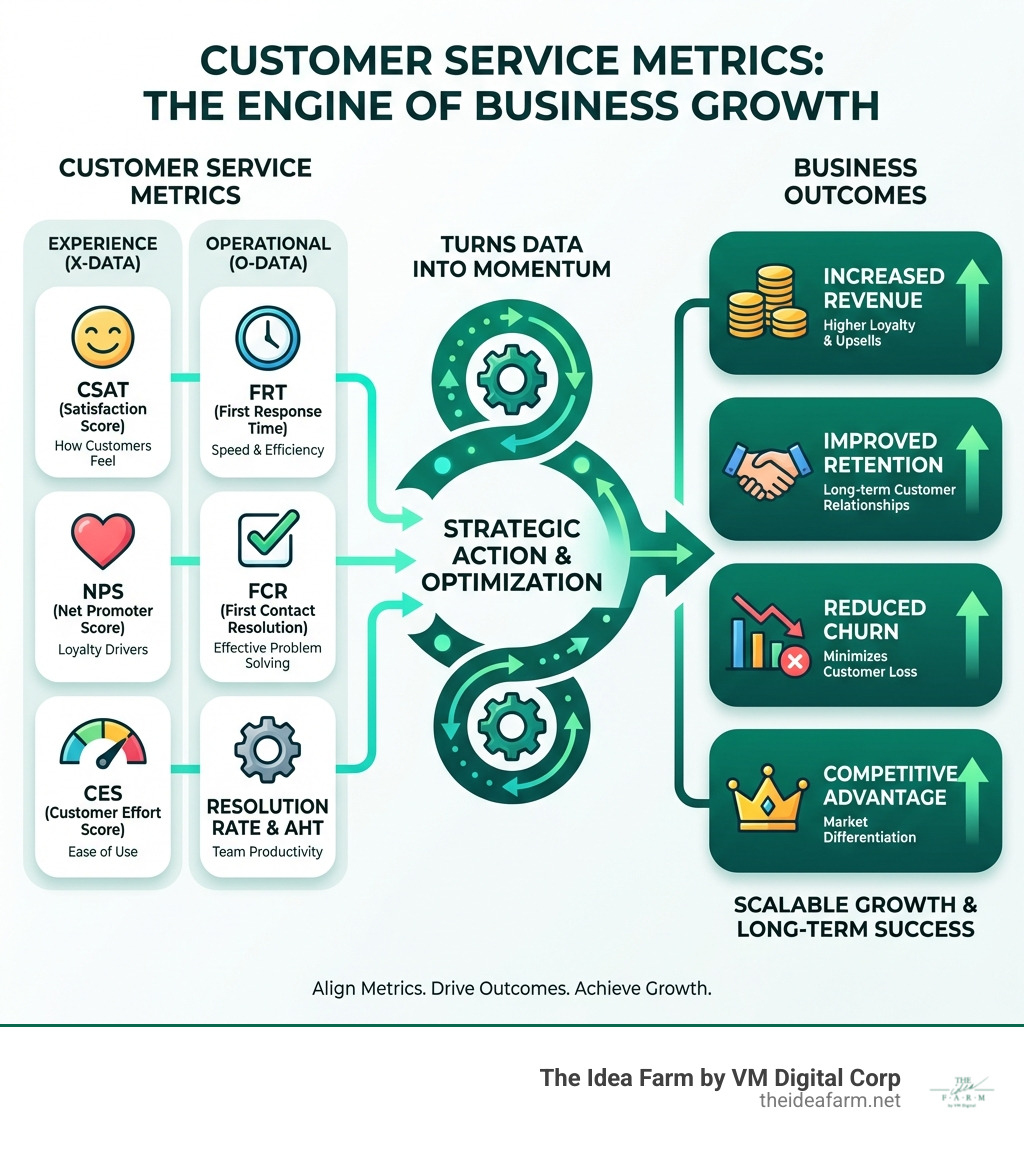
This chart shows how service numbers lead to more money. Happy customers stay longer. Fast service saves money. Together, they help your business grow.
Bad service hurts your business. If a customer has a bad time, they will likely leave. Most people will quit a brand after just one bad experience. This is lost money.
Good service helps you grow in these ways:
Measurement is a core plan. It is not a side project. When leaders see what happens in service, they can fix things. They can keep customers and find new ones. Service numbers turn help into a way to grow.
For a company that wants to grow, you must be the same every day. One great week is not enough. You need a system. Numbers give you that system. They answer three questions:
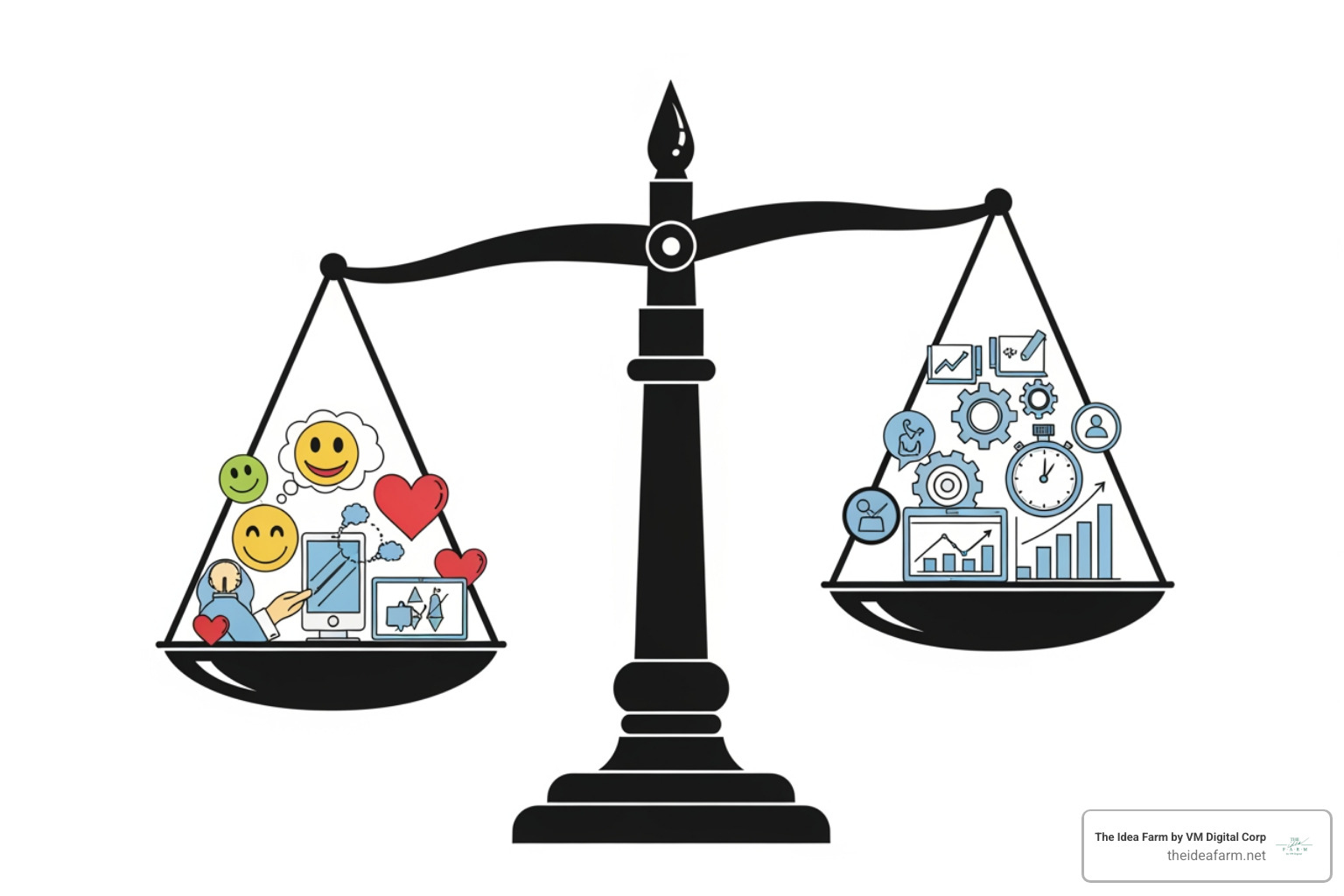
Experience Data (X-Data) is about feelings. It tells you if customers are happy. It asks, "Do they like us?"
Operational Data (O-Data) is about facts. It tells you how fast your team works. It asks, "How fast were we?"
You need both. If customers are unhappy but the team is fast, something is wrong. Maybe the team is not solving the real problem. Using both types of data helps you find the truth. This helps you fix the right things so your business can grow.
For example, if your team is fast but customers are still unhappy, speed is not the problem. You may need to be more clear or helpful. If customers are happy but the team is slow, you may need better tools to grow.
When you look at both, you see the whole picture. This makes it easy to fix things that protect your money and trust.
For more on how service helps, see this page on customer experience.
A leader needs a list of numbers. This helps you see if your plan is working.

You need a system to measure success. Follow these four steps to turn data into growth.
Do not track every number. Pick 3 to 5 numbers that matter for your goals. If you want people to stay, track NPS and Churn. If you want to save money, track speed.
Use each number to make a choice. For example:
Start with a small set of numbers. Pick things your team can change every week.
Use surveys to ask customers how they feel. Use software to track how fast your team works. Keep all this data in one place.
Make sure your rules are clear:
Clear rules help the team improve the right way.
Numbers tell you what is happening. You must find out why. If people are unhappy, read what they wrote. Use tools to find patterns. This helps you find the real problem.
Look at low scores every week. Label each one with a reason, like:
Then, fix the main problem. If people are confused, make better guides. Do not just try to reply faster.
Share the numbers with your team. Talk about them every week. Use the data to plan new training. This helps everyone win.
Set a simple schedule:
Connect service to growth. If you work with The Idea Farm, service numbers help marketing and sales. Service data can tell you:
That is how to measure success in customer service. Pick the right numbers, find the causes, and keep getting better.
Start small. Pick one for feelings and one for facts. CSAT and First Contact Resolution are good choices. They tell you if people are happy and if you are fast.
Check speed every day. Check loyalty and churn every month. This helps you fix small problems before they get big.
Find the real problem behind a bad score. If a score is low, ask why. Then make a plan to fix it. Tell your team when things get better. This helps everyone grow.
Measuring success helps you grow. It is not just about numbers. It is about making customers happy so they stay.
When you have a system, you stop guessing. You start growing. You can see what works and what does not. This helps you lead.
At The Idea Farm, we help leaders build these systems. We turn service into a tool for more money and better growth.
Are you ready to see your numbers in one place?
See how a Growth Dashboard can show your most important metrics