
July 20, 2026
Brand awareness campaigns are one of the most invested-in and least understood parts of a marketing budget.
Here is a quick answer if you need it fast:
What makes a brand awareness campaign work?
Most business leaders know they need to build brand awareness. But many are spending money without knowing if it is working. They run ads, post on social media, maybe sponsor something, and then wait. No clear signal. No system. Just hope.
Here is the uncomfortable truth: 69% of consumers prefer to buy from a brand they already know over a cheaper alternative. That means awareness is not a vanity metric. It is a commercial one.
But here is where most campaigns break down. They get launched without a measurement framework, without a clear audience, and without a strategy that connects awareness to actual growth. You end up with impressions and no impact.
This guide breaks down what actually drives results with real campaign examples, practical frameworks, and metrics that tell you the truth about your brand's reach.
I'm Jose Escalera, CEO of The Idea Farm by VM Digital, and I have spent my career building companies, advising growth-stage brands, and developing brand awareness campaigns that are accountable to real business outcomes. The frameworks in this article come directly from that work, not theory.
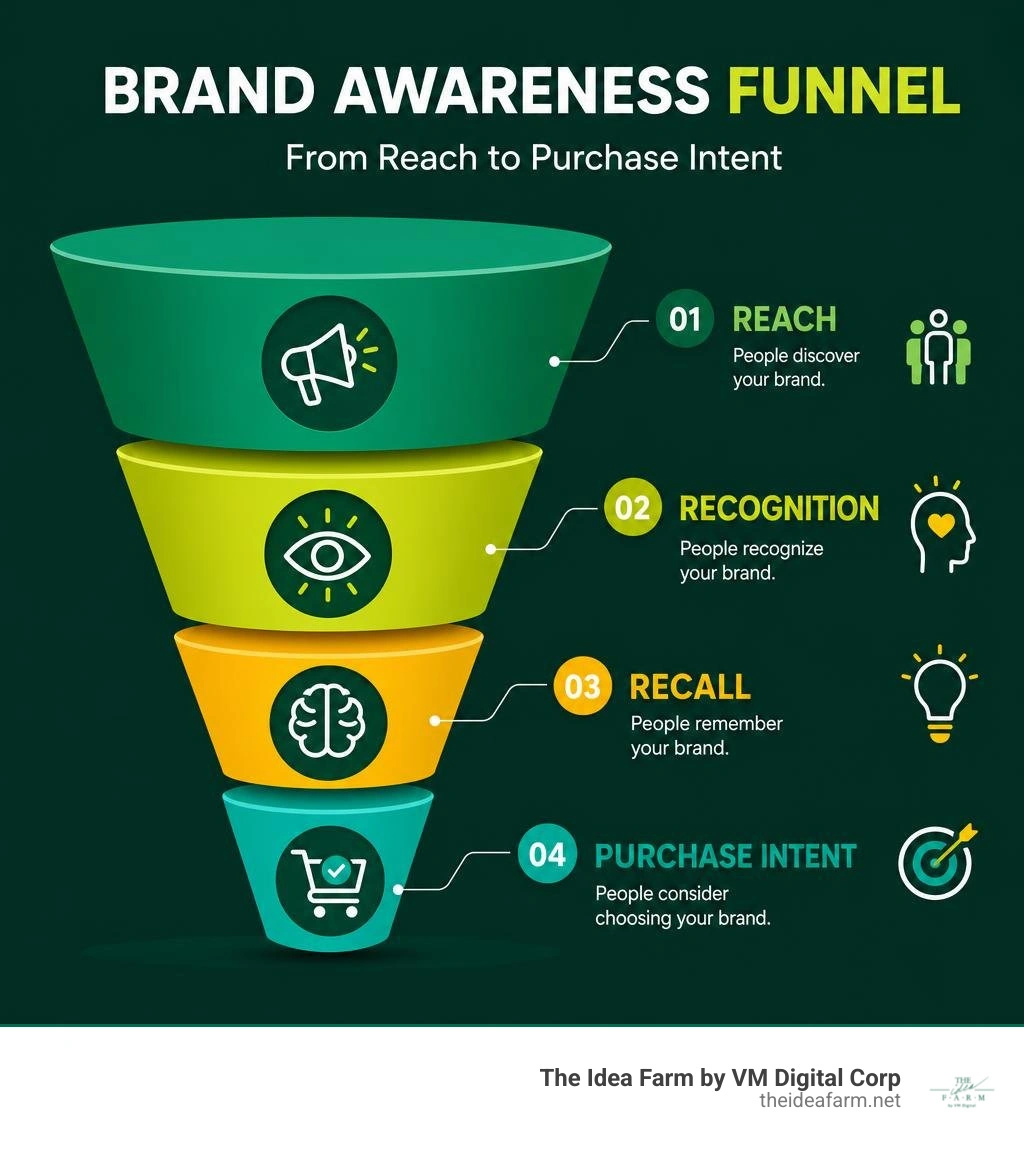
Brand awareness campaigns terms you need:
Many business leaders look at the wrong numbers when they run a brand campaign. They treat a brand campaign like a direct response ad. They expect instant clicks and immediate sales. When those do not happen right away, they panic and pull the plug.
This happens because traditional metrics like immediate return on ad spend do not tell the whole story. A brand campaign is not about getting a fast sale today. It is about building a system that makes every future sale easier, cheaper, and faster. It is about increasing your customer lifetime value by building long term trust.
To understand if your brand efforts are working, you must look at how people find you and how they remember you. When you build a strong brand, you lower your customer acquisition costs over time. You create a baseline of demand that does not disappear the moment you stop spending money on paid ads. If you want to see how this fits into your larger marketing system, read our guide on how to build an Effective Advertising Campaign.
People often confuse brand recognition with brand awareness, but they are different stages of the customer journey.
Brand recognition is the first step. It is a customer's ability to identify your business based on visual assets. This includes your logo design, your colors, your fonts, or your packaging. When someone sees your logo on a sign and says, "I know that company," that is recognition.
Brand awareness goes much deeper. It means the customer understands your brand attributes, your values, and what you actually do. They do not just recognize your name. They connect your name to a specific feeling, a level of quality, or a solution to their problem. Recognition is knowing your face. Awareness is knowing your character and trusting you to solve their problem.
Timing is everything when you build a brand. You should not launch a brand campaign just because you have extra budget. You need a clear strategic reason.
The best times to launch a brand awareness campaign include:
By aligning your campaign with these business milestones, you ensure your brand budget supports your overall growth goals.
Building a brand is not a one-time project. It is a repeatable system. Without a structured system, your marketing will feel disjointed and confuse your audience.
A successful brand system relies on three main pillars:
When these elements work together, they build a foundation for every Digital Ad Campaign you run in the future.
Humans are wired for stories, not product feature lists. If you only talk about your services, people will tune you out. Authentic storytelling is how you humanize your brand and build a real emotional connection.
Your stories should focus on your brand values and your customer's success. Share why you started your business. Highlight the real problems you have solved for people in your community. When you show your human side and speak with authenticity, you stop being a faceless vendor. You become a trusted partner.
Modern technology allows you to deliver your stories to the right people at the right time. You do not have to blast your message to the entire world. Instead, you can use first-party data and smart audience segmentation to make your campaigns feel personal.
For example, you can use retargeting ads to reach people who have already visited your website but did not buy yet. This keeps your brand top-of-mind. Because retargeted ads have a click-through rate that is ten times higher than standard display ads, they are a highly efficient way to build deep awareness. To learn more about setting up these systems, explore our Digital Ads Guide 2026.
The best way to learn how to build a great campaign is to look at brands that have done it successfully. These five examples show how different strategies can lead to massive commercial growth.

Heinz created a brilliant global campaign based on a simple visual coincidence. They noticed that almost every french fry box in the world naturally resembles the shape of their iconic Heinz Keystone logo.
Instead of running traditional ads, they launched a visual campaign showing these fry boxes with minimal branding. This clever observation turned every fry box in the world into free advertising space for Heinz. The campaign ran across 33 markets and drove incredible business results. In Canada, their household penetration rose from 7% to 10.31%, bringing in millions in gross sales. Their sales on Uber Eats grew by 222% during the campaign.
You can read the full breakdown of how they turned a simple shape into a massive sales driver in the Heinz Noticed That Every Fry Box in the World Is Shaped Like Its Logo - Ads With Benefits case study, or view the visual assets at Heinz – Look Familiar: Fry Boxes Resemble The Heinz KeystoneLLLLITL.
Skincare marketing is often very serious and polished. CeraVe decided to take a completely different approach. They partnered with NBA star Kevin Durant for a comedy-driven campaign that played on a viral social media joke about his dry skin.
The campaign was social-first and lived on platforms where Durant was already highly active. It featured funny, native-style videos of Durant being named the new face of legs. By using humor and leaning into an authentic internet meme, the campaign generated over 4 billion PR impressions and 83 million organic video views. More importantly, it led to a massive 43% sales lift, which is almost unheard of for a mature brand.
You can read more about this brilliant mix of comedy and influencer marketing in the article How CeraVe’s Kevin Durant campaign led to a 43% sales lift.
Currys, a tech retailer, wanted to promote their worldwide travel adapters to a younger audience. Instead of buying expensive TV ads, they executed a low-budget experiential marketing stunt at a Pitbull concert.
They noticed a popular fan trend where concertgoers dressed up as the artist Pitbull. Currys dressed their own staff in matching purple suits, bald caps, and fake mustaches to blend in with the crowd. They handed out free travel adapters while filming the entire process on mobile phones to match the style of user-generated content.
With a production budget of only $7,000 and zero dollars spent on paid media, the stunt went viral. It gained over 2 million organic views on their own channels, over 20 million views from fan-generated content, and reached a global audience of 600 million through earned news media. Read the full story behind this creative stunt at Why Currys dressed as Pitbull to ambush his concert with free adapters | The Drum.
Dove wanted to promote their Intensive Repair Hair Mask by proving it actually works. Instead of hiring actors or writing polished scripts, they turned to Reddit, a platform famous for its unfiltered honesty.
Dove gathered the first 50 unedited Reddit reviews of their product and published them on massive physical billboards and social media ads. They did not edit the negative points. They even included a review that said the product smelled like expired hotel shampoo.
This radical transparency built massive consumer trust. People loved the honesty, leading to over 1 billion impressions and a significant lift in sales. You can read how they pulled off this daring campaign in the Unilever article How Dove turned Reddit’s honesty into unmissable marketing | Unilever.
Hilton wanted to remind travelers that where you stay matters just as much as where you go. They partnered with global icon Deepika Padukone to launch a campaign focused on the emotional comfort of a great hotel experience.
The campaign used beautiful storytelling, music, and movement to show how a high-quality hotel stay removes the stress of travel. By highlighting how their staff and service help guests feel comfortable enough to be their authentic selves, Hilton connected with travelers on a deep emotional level. The campaign built incredible brand equity, commanding over 11 billion views across social and digital platforms.
To learn more about this international hospitality campaign, read the press release Global Icon Deepika Padukone and Hilton Celebrate the Power of The Stay In the Next Chapter of Their Internationally Acclaimed Campaign.
Measuring the return on investment of a brand campaign requires looking at both hard numbers and consumer feelings. You cannot rely on a single metric. You must build a balanced dashboard that tracks both quantitative and qualitative data.
To get an accurate baseline, you should measure your brand metrics before you launch your campaign. This allows you to see the exact lift your campaign generates over time. For a complete guide on how to structure these measurement systems, check out our Ultimate Digital Advertising Campaigns Guide.
Quantitative metrics are the hard, numerical data points you can pull from your website and social media analytics.
The most important quantitative metrics for brand awareness include:
Qualitative metrics help you understand how people feel about your brand. These metrics require you to look beyond simple numbers to find the sentiment behind the data.
Key qualitative methods include:
You do not need a multi-million dollar budget to build a highly successful brand. Small and mid-sized businesses can build massive brand equity by being smart, consistent, and deeply connected to their local communities.
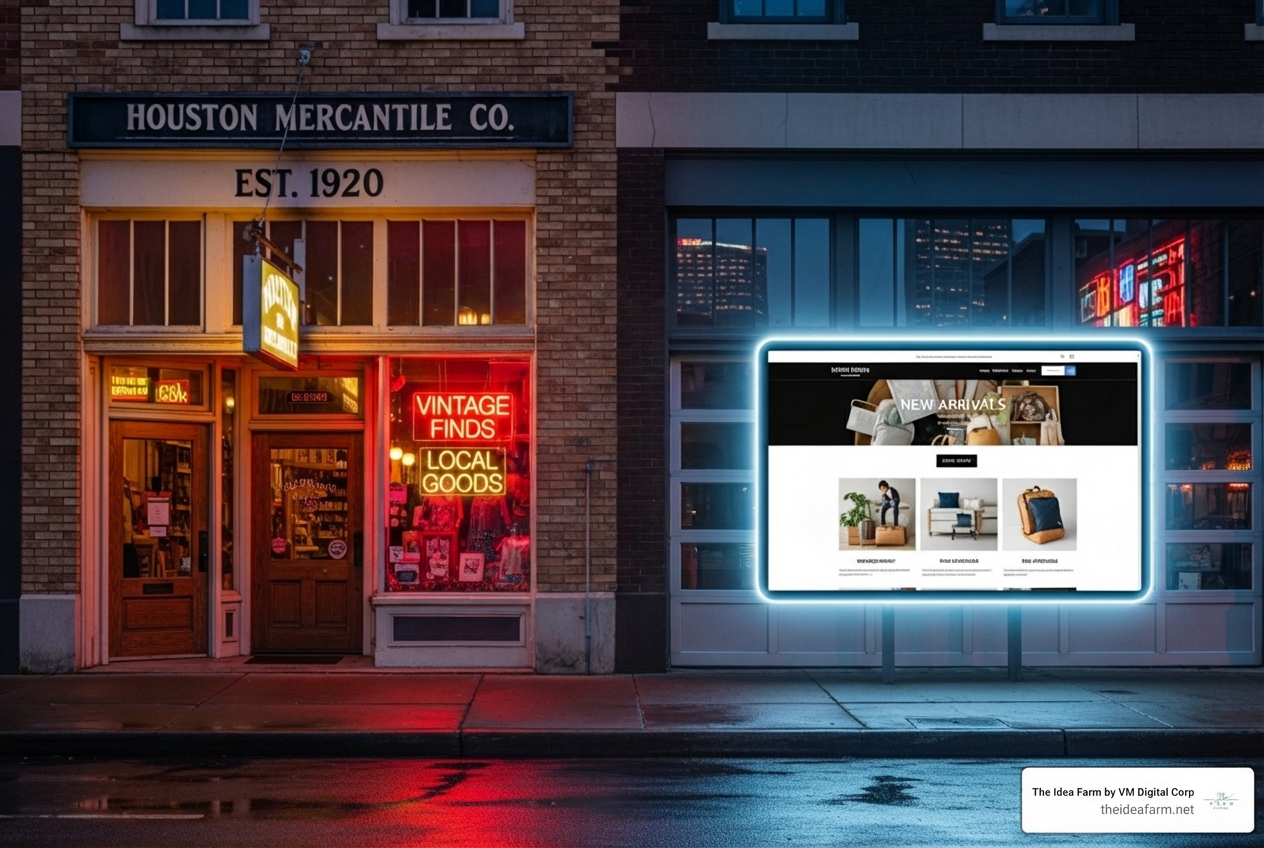
If you are a business owner in Houston, TX, or Danville, KY, you can build incredible local awareness by focusing on organic growth strategies, local search optimization, and community relationships. For a deeper look at budget-friendly marketing strategies, read our Digital Advertising Services Complete Guide.
Your employees are your greatest brand ambassadors. This is especially true in B2B marketing, where people buy from people, not corporations.
LinkedIn is the ultimate platform for B2B brand building. Consider these facts:
By training your team to share their professional expertise and write thought leadership content on LinkedIn, you build massive brand authority for your business without spending money on ads. For businesses in the Houston area, connecting with local professional networks like AMA Houston | Community for Marketing Professionals is a great way to amplify these organic efforts.
Another highly cost-effective way to grow is to partner with other non-competing businesses that serve the same target audience. This allows you to instantly access their customer base.
You can run joint webinars, co-author helpful guides, or host local community events together. For example, if you run a business in Danville, partnering with local service providers and listing your business on local directories can quickly build trust. This helps you establish a strong local presence and connect with customers right in your community.
Brand recognition is the first step of the process. It means a customer can identify your business based on visual assets like your logo design or color scheme. Brand awareness goes much deeper. It means the customer understands your brand attributes, your values, and what makes your products or services unique.
Unlike direct response ads, brand campaigns do not produce major results overnight. It typically takes three to six months of consistent campaigning to see a measurable lift in brand search volume, direct website traffic, and customer trust. The exact timeline depends on your industry, your budget, and how saturated your market is.
There is no single number that works for every business. A good rule of thumb is to allocate 10% to 20% of your total marketing budget specifically to brand-building efforts, while the rest goes to direct lead generation. This ensures you are constantly feeding the top of your sales funnel while still hitting your short-term sales goals.
A successful brand awareness campaign is not about vanity metrics or chasing viral fame. It is about building a connected, consistent marketing system that makes your business the obvious choice for your target audience. When you stop treating brand building as an expense and start treating it as a system, you unlock sustainable, long-term growth.
At The Idea Farm, we do not believe in random acts of marketing. We act as your Fractional Growth Partner to build data-driven marketing systems tailored directly to your business goals.
If you are ready to stop guessing and start building a brand that drives real revenue, let's talk. Build your connected marketing system with us today.