
June 24, 2026
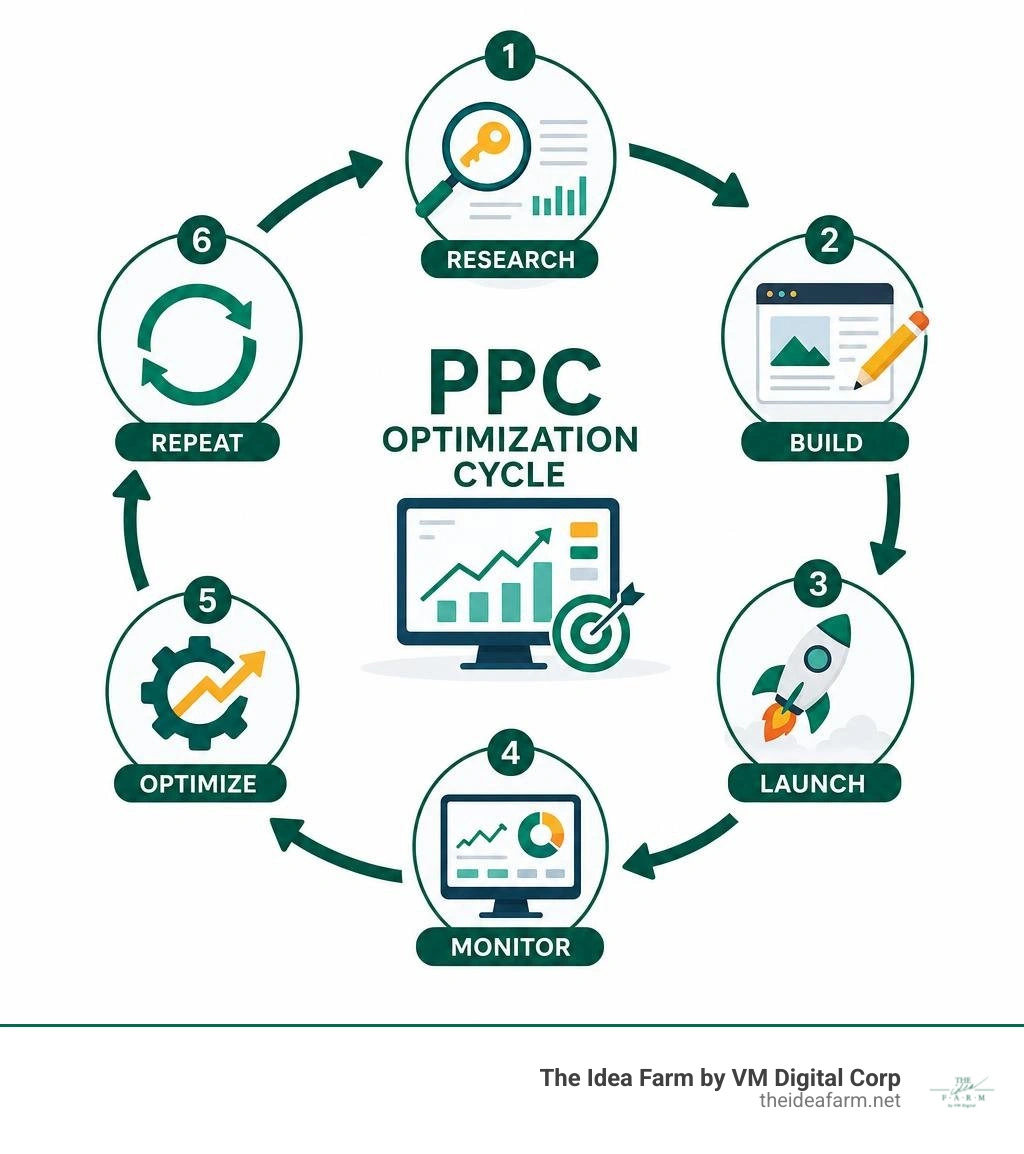
PPC advertising campaign management is how you plan, watch, and improve your paid ads. It helps you get the most value from every dollar you spend.
Here is a simple list of what it includes:
This is not a one-time setup. You must test, measure, and improve your ads all the time.
Here is the real problem. You turn on your ads. Your money disappears. You do not know what worked. Maybe people clicked but did not buy. Maybe your keywords were too broad. Maybe your website was confusing. Maybe all three.
Wasted ad money is a systems problem, not just a budget problem.
Without a good plan for PPC advertising campaign management, you are just guessing. Your costs will go up fast. In tough markets, one click can cost $10 to $30 or more.
The good news is that a simple plan fixes this. It brings order to the mess.
I am Jose Escalera, the head of The Idea Farm by VM Digital. I have built companies, worked in media, and helped brands grow. I see PPC advertising campaign management as a system to help your business grow, not just a quick trick. This guide will show you how to do it.
Ppc advertising campaign management further reading:

Let us start with the basics. Pay-per-click tracking and measuring your costs are the main parts of this process. When you run paid ads, you pay a small fee every time someone clicks on your ad.
But you cannot just set up your ads and walk away. If you do, you will lose money.
PPC management is the daily work of watching your ad spend. It means looking at how your ads perform. It means changing your bids. It means making sure your ads show up for the right searches.
When you manage a digital ad campaign, you are building a system. This system connects your business goals to what people see online. It helps you get seen on search engines. It makes sure your brand is the first thing people see when they look for what you sell.
Our team at The Idea Farm views PPC management as a science and an art. We track every dollar. We measure every click. We do this so your business does not waste money on search words that do not bring sales.
PPC management is important because it gives you control over your budget. You can decide exactly how much you want to spend each day. You can target specific groups of people based on where they live, what they search for, and what devices they use.
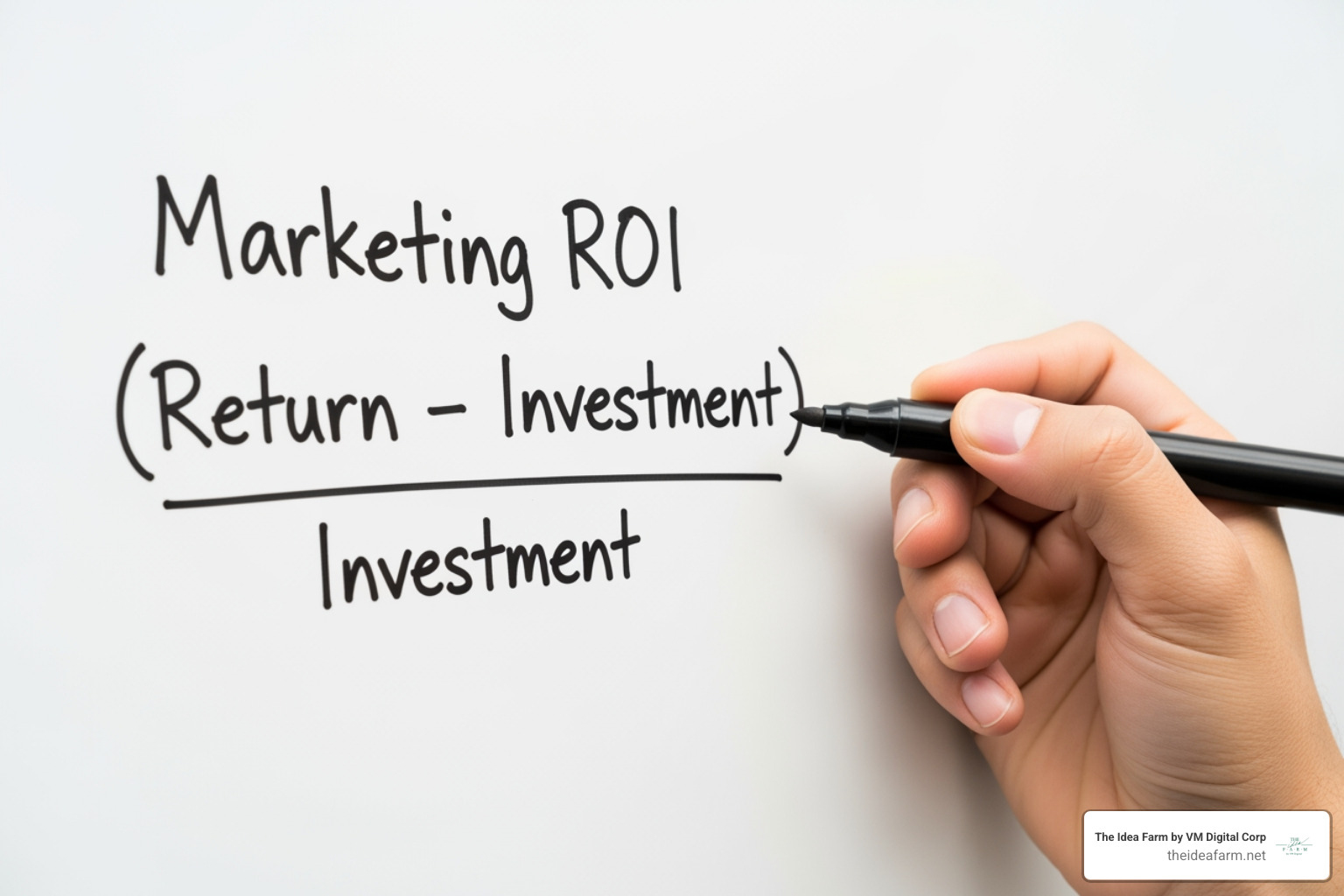
When you manage your campaigns well, you can improve marketing ROI fast. You do this by stopping wasted spend. You stop bidding on words that do not sell. You put more money into words that do sell.
PPC also helps your search engine optimization (SEO) work. SEO takes time to build, but PPC gets you to the top of search results right away. Together, they make your brand look strong. If you are a business in Houston TX, using Houston PPC Online Advertising with your SEO means you win more search space than your rivals.
A good PPC system makes your business easy to find. It builds trust. It brings in steady leads. It turns visitors into paying customers.
To get the best results, you need a good plan. You cannot put all your words and ads into one big pile. You must group them in a smart way.
Here is a simple breakdown of how we set up campaigns for different businesses:
Having a clear plan is key for digital advertising campaign management. It keeps your account clean. It makes it easy to see which products are making money.
Keywords are the foundation of search ads. But there is a big difference between the keywords you bid on and the actual words people type into Google.
To control this, you must understand keyword match types.
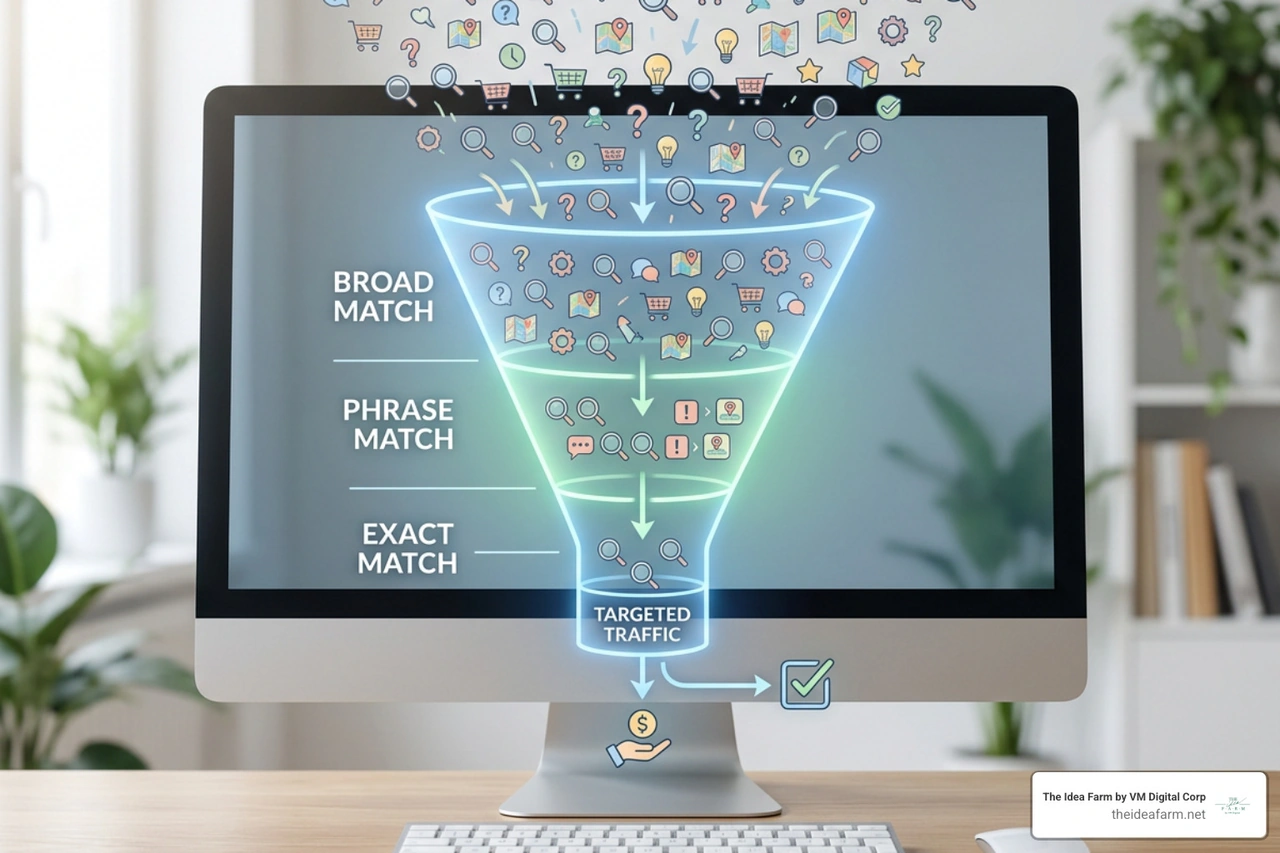
By checking your search reports weekly, you can find bad words and block them. This simple task saves thousands of dollars.
Your ad words are what make people click. In Google Ads, we use Responsive Search Ads. These ads let you write up to 15 headlines and 4 descriptions. Google's AI then tests different mixes to see which one works best.
When writing your ads, focus on the benefits. Do not just list features. Tell the user how you solve their problem. Use clear, simple action words like "Get a Free Quote" or "Buy Now."
You must also make sure your ad matches your landing page. If your ad promises a "50% Discount on Boots," your landing page must show those boots with that discount right away.
Good matching improves your Quality Score. Google gives every keyword a score from 1 to 10. A high score lowers your cost per click. It helps your ads rank higher without costing more money.
To keep your ads fresh, you must run regular tests. Test one thing at a time. For example, test two different headlines to see which one gets more clicks. Once you have a winner, turn off the loser and test a new one.
Once your keywords and ads are ready, you must decide how to bid. You have two main choices: manual bidding or automated bidding.
Manual bidding gives you full control. You set the exact highest price you want to pay for a click. Many experts like this when starting a new campaign. It keeps the system from spending your money too fast.
Automated bidding uses smart computer systems to set your bids. Google looks at millions of signals in real time. These signals include the user's location, time of day, device, and past searches.
Some common smart bidding plans include:
If you manage your campaigns with code, you can find Technical details on Google Ads API campaigns to help you set up these rules.
But getting clicks to your website is only half the job. If your website is slow, confusing, or hard to use, people will leave. Your page must be simple. It should have one clear action, good pictures, and trust signals like reviews.
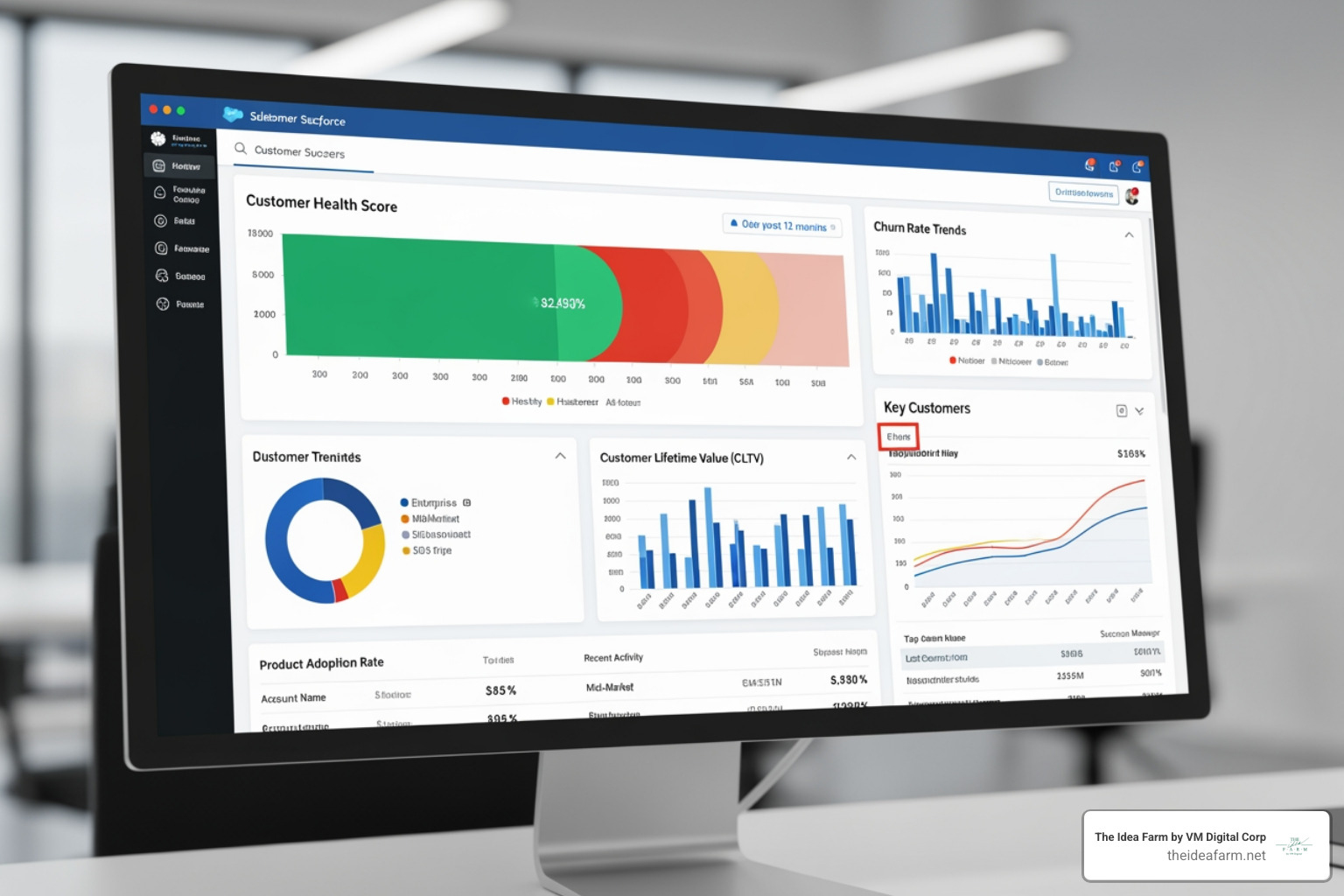
To know if your campaigns are working, you must set up conversion tracking. This lets you measure marketing effectiveness by tracking what happens after a user clicks your ad. Did they buy a product? Did they fill out your form? Did they call your business? If you cannot track these actions, you cannot improve your campaign.
Should you manage your ads yourself, hire an employee, or work with a professional agency? This is a big choice for any growing business.
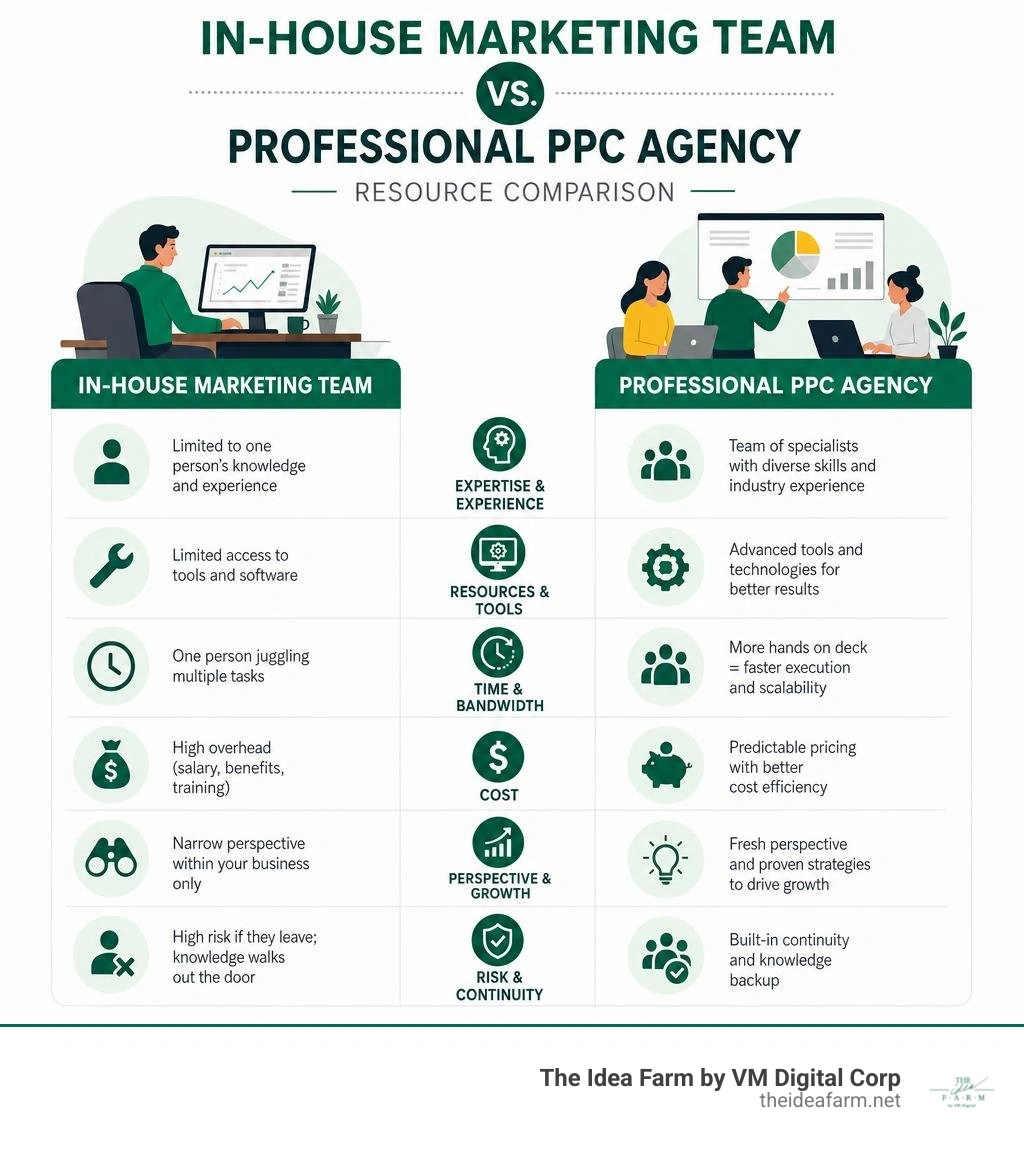
Let us look at the pros and cons of each option:
If you want to understand the full world of paid media, check out our digital advertising services complete guide. It breaks down how different channels work together to grow your business.
For businesses in our local areas, working with local experts makes a big difference. If you are in Texas, you can explore local Paid Search Houston options to ensure your campaigns are built with regional insights. Whether you are in Houston or Danville, Kentucky, having a partner who understands your specific market is key to growing your paid media.
At The Idea Farm, we act as your Fractional Growth Partner. We do not just run ads. We build connected, data-driven marketing systems that match your financial goals.
The world of paid search is changing fast. In 2026, AI and automation play a huge role in how ads are managed.
Google's Performance Max campaigns are a great example. These campaigns use AI to show your ads across all of Google's networks. This includes Search, YouTube, Display, Discover, and Gmail.
To see how these campaigns are set up technically, developers can check out the Google Ads API campaigns overview. This guide shows how Google is moving toward asset-based campaign setups.
But automated tools still need human direction. AI is great at looking at data and matching ads. However, it does not understand your business goals, your profits, or your customers' deeper feelings.
The best campaigns in 2026 combine smart AI automation with strong human plans. We use AI to do the heavy work of data analysis, but we keep tight control over budgets, messaging, and overall business goals.
Here are quick answers to some of the most common questions business leaders ask us about managing paid ads.
A keyword is the specific word or phrase you bid on in your ad account. A search term is the exact phrase a real person types into Google. Your keyword plan decides which search terms will trigger your ads.
You should check your search reports and update your negative keyword lists at least once a week when starting new campaigns. For older campaigns, a monthly check is usually enough to protect your budget.
A Quality Score of 7 or higher is good. It matters because Google rewards highly relevant ads with lower costs per click and better ad spots. Improving your score directly increases your campaign profits.
Running paid ads without a good management system is like pouring water into a leaky bucket. To win in 2026, you must treat PPC as a continuous, data-driven system. You need deep keyword research, tight campaign setups, regular testing, and precise conversion tracking.
We build these exact systems for our clients. As a Fractional Growth Partner, The Idea Farm by VM Digital does not just focus on simple metrics like clicks or impressions. We focus on your bottom line. We build marketing systems tailored to your specific business numbers and growth goals.
If you are ready to stop wasting ad spend and start growing your business with a predictable, high-performing system, Get started with professional PPC Campaign Management with us today. Let us build a paid media engine that drives real business growth.