
March 24, 2026
You spend money on ads, content, and events. Then the month ends. Someone asks a simple question: Did marketing help sales?
Many teams cannot answer with facts. They show clicks and likes. But they cannot show what brought in good leads and money.
This is what it means to measure marketing effectiveness. You build a simple system. It links what you do to what the business needs.
Quick answer: How to measure marketing effectiveness
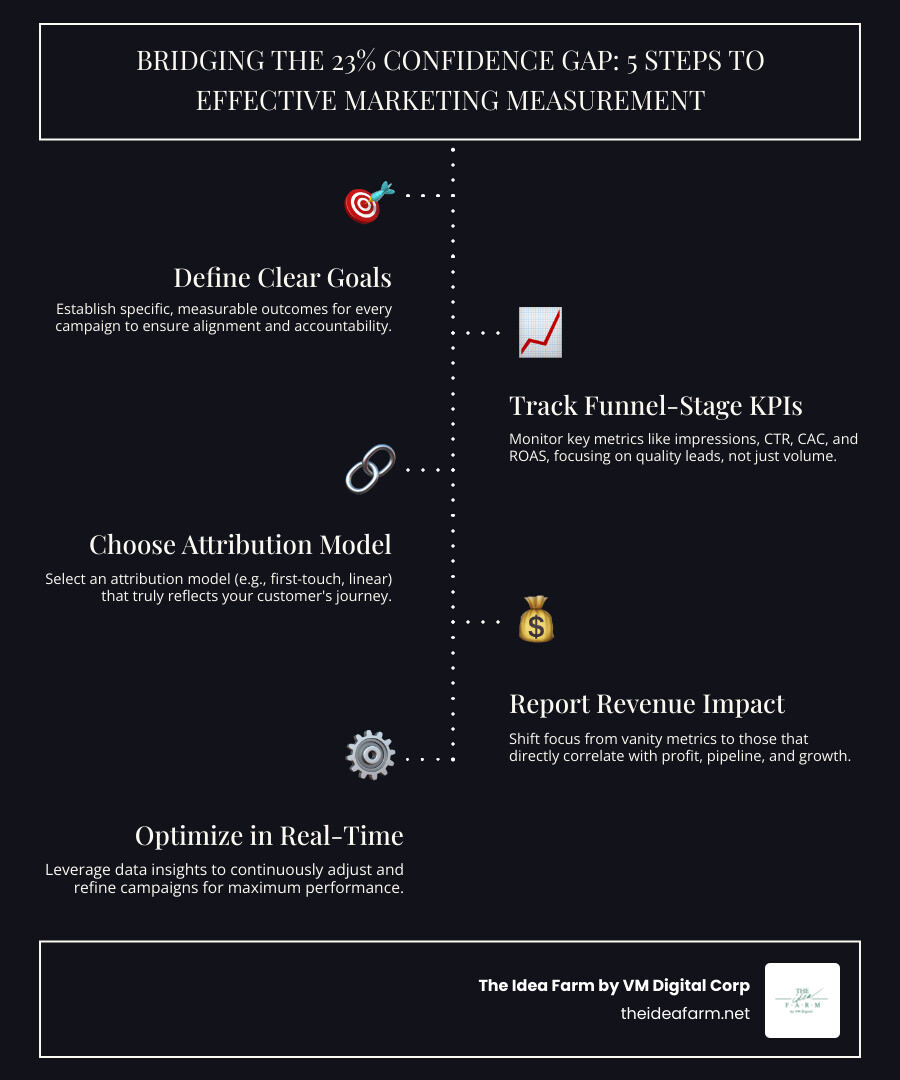
Only 23 out of 100 marketers feel good about their data. This is a problem with the system, not the tools.
Most businesses have too much data. They need a clean way to use it to make choices.
I am Jose Escalera. I help build and grow businesses. Growth is easier when tracking is simple and tied to sales.
Terms related to measure marketing effectiveness:
If you do not track results, you cannot manage your money.
Many business owners have this problem:
To measure marketing effectiveness, you must link work to sales. You should track:
A big company called L'Oreal did this. They moved their money to online ads. They saw a 62 percent increase in online sales.
You need to know what you get back for every dollar you spend. If you know that, you can grow with less risk. If you do not, you are just guessing.
Marketing is a long path. It is not just one event. Do not just look at the final sale. If you only look at the end, you will not know why people left your site.
To measure marketing effectiveness, track every step. It is like a water pipe. If no water comes out, check every part of the pipe.
This is when people first see your brand. Your goal is for people to remember you.
These are important. Most marketers fail here because they do not link these views to sales. You need to know if the right people are seeing your ads. To learn more, see this Marketing Terms list.
This is when a person picks you or someone else.
In big or small towns, businesses often look at clicks. But a click is not a customer. You must look at the quality. A law firm might find that search ads bring real clients. But social media ads might bring junk. By tracking quality, they can spend money where it works. To learn more about ads, see our guide on digital ads.
To measure marketing effectiveness, you need one main number. Most use ROI. This shows if you made a profit. You must know what it costs to get a customer.
| Metric | What it Tells You | Why it Matters |
|---|---|---|
| CAC | Cost to get a customer | Shows if your ads cost too much. |
| CLV | Value of a customer | Shows how much you can spend to get a lead. |
| ROAS | Money from ads | Shows the money made from one ad. |
| ROI | Total profit | The money left after all costs are paid. |
A good business makes 3 times more from a customer than it costs to get them.
Giving CreditThis is deciding which ad gets the credit for a sale. People do not buy the first time they see you. They might see an ad, read a post, and then search for you.
We suggest using a growth dashboard. This helps you see which ads really work.
You cannot measure marketing effectiveness with broken tools. If your ads do not talk to your sales list, you are guessing.
The Tools You Need:
Your website systems should track things on its own. Clean data helps you make good choices. If your data is messy, your reports will be wrong.
Once you know the basics, try these smart steps. This helps you know why things happen.
Testing for Real GrowthThis is a way to measure marketing effectiveness. It asks: Would this person have bought from us anyway? One brand found that many people would have bought without the ad. They saved a lot of money by stopping those ads.
Asking WhyNumbers tell you what happened. People tell you why. Good brands use surveys to learn. LEGO is a great example. They used research to make their ads better for girls. This was not just to be nice. It helped them reach more people. It proved that Girls Are Ready to build and create.
To stay ahead, you can also look at new playbooks that use math and tests to grow.
Some numbers look good but do not make money. These are:
We suggest this plan:
It depends on your profit. A common goal is to make 4 dollars for every 1 dollar you spend. If your costs are high, you might need to make 10 dollars. If you sell very expensive things, 2 dollars might be enough.
Stop guessing. Marketing is about math and systems. When you measure marketing effectiveness, you can grow with confidence.
At The Idea Farm, we are your growth partner. We build the systems and charts. We turn your budget into a growth engine.
Whether you are in a big city or a small town, you deserve a system that works hard. If you are ready to grow, talk to us today. Let us find your numbers and hit your goals together.