
July 9, 2026
A PPC advertising specialist is a digital marketing professional who plans, builds, and manages paid ad campaigns on platforms like Google Ads, Microsoft Advertising, and Meta to drive targeted traffic and measurable revenue for a business.
Here is what a PPC specialist does, at a glance:
Most businesses assume running paid ads is straightforward. Set a budget, write an ad, and watch the leads come in. In reality, the gap between spending money on ads and making money from ads is where most businesses quietly bleed budget without knowing why.
The role of a PPC specialist is not just to run ads. It is to make sure every dollar spent moves toward a profitable outcome.
I'm Jose Escalera, CEO of The Idea Farm by VM Digital, and my background spans company building, sales, and media strategy across multiple industries, which gives me a view of how a skilled PPC advertising specialist can either accelerate growth or expose deeper gaps in a business's sales and marketing system. In the sections below, we will break down exactly what these specialists do each day and how to evaluate whether you need one.
Similar topics to ppc advertising specialist:
At its core, pay-per-click advertising is a simple transaction. A business pays a platform like Google or Bing only when a user clicks on their ad. But behind this simple model lies a complex system of auctions, algorithms, and human psychology.
A professional ppc advertising specialist does not just buy traffic. They buy customers. This distinction is vital for business owners to understand. Many junior marketers focus on driving clicks. A true specialist focuses on search intent and bottom-line profit.
According to PPC expert Yaroslav Smoliienko, Google Ads is about sifting through noise to find converting diamonds. In most ad accounts, 95% of search traffic is actually noise. A great specialist uses a strict 80/20 rule. They identify the 20% of keywords that generate 80% of the revenue and focus the budget there.
When we look at paid search through a strategic lens, we see that it must connect directly to your sales numbers. If your campaigns generate leads but your sales team cannot close them, continuing to run ads is a waste of money. A specialist looks beyond the ad platform. They analyze the entire customer journey. This approach is detailed further in our PPC Campaign Management Guide 2026.
The core role of the specialist is to balance two main goals:
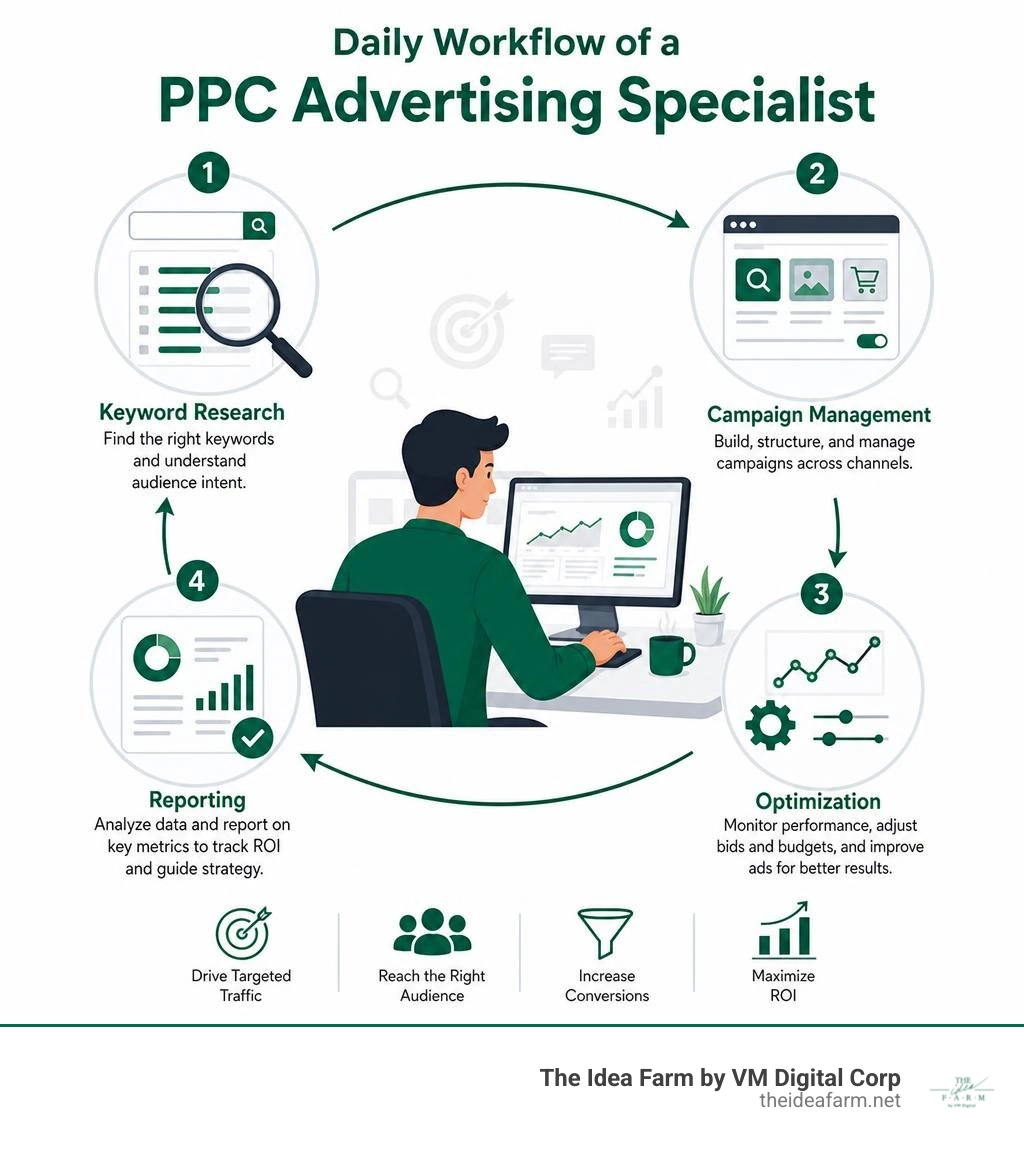
The daily routine of a specialist is a mix of creative writing, technical troubleshooting, and deep data analysis. They do not just set up campaigns and walk away. They manage the account actively every single day.
Every morning, a specialist logs in to check the health of their accounts. This early check prevents small issues from turning into expensive mistakes. Here is what they focus on:
This daily vigilance is the hallmark of a dedicated PPC Manager. They catch errors before they drain your budget.
Once the morning checks are complete, the specialist moves on to active optimization. This is where strategic growth happens.
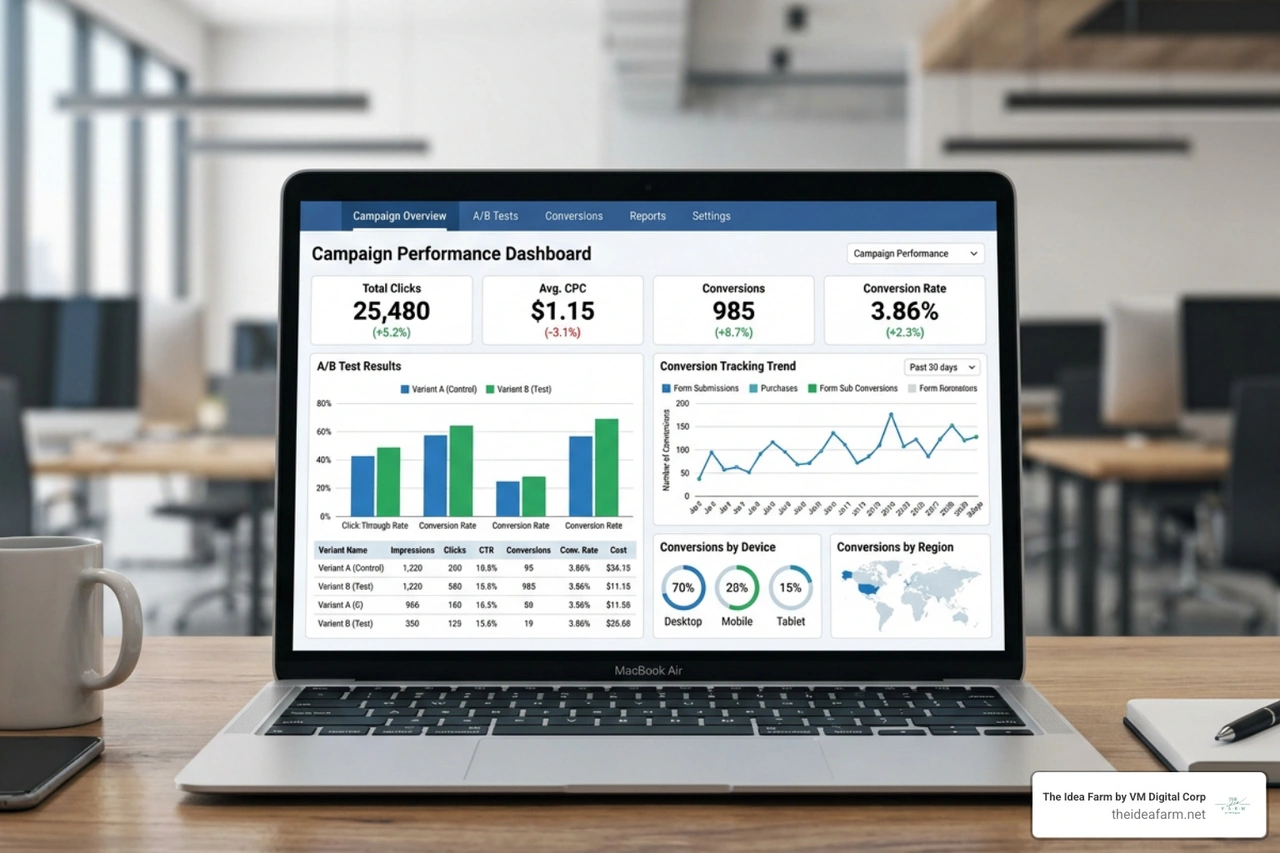
Optimization is not about making random changes. It is about testing hypotheses. Experienced specialists like Sam Fickling focus on structure and feed optimization to ensure ads reach the right eyes at the lowest cost.
Here is a list of daily and weekly optimization tasks they perform:
To run these tasks, a specialist must master a specific stack of tools and skills. This role requires both analytical thinking and creative writing.
A top-tier specialist like Natasha Rudz combines platform expertise with advanced technical setups, including server-side tracking and consent mode. Here are the primary tools they use daily:
Many business owners try to manage their own Google Ads. It seems simple at first. However, the platforms have become highly complex. Automated options like Performance Max can easily waste thousands of dollars if they are not set up with guardrails.
For example, Google often hides the Display Network option when you build a Search campaign. If you leave that box checked, Google will mix high-intent search traffic with low-intent display traffic. This is one of the fastest ways to burn your budget.
Hiring a professional saves time and prevents these costly mistakes. A specialist understands how to navigate these settings. They know how to structure campaigns so your budget goes toward actual buyers.
If you are located in Houston, Texas, or Danville, Kentucky, working with a partner who understands your local market is a major advantage. Our team at The Idea Farm helps businesses in these regions build connected marketing systems. We align your paid search with your overall business goals to ensure sustainable growth.
Instead of hiring an in-house employee, which requires training, benefits, and software costs, businesses often find better value in outsourcing. You can explore open positions on the PPC Specialist Jobs, Employment - Indeed page to see what it takes to recruit top talent in-house, or you can leverage our structured PPC Campaign Management services.
We offer targeted local strategies for businesses in our key regions:
Paid search can be confusing. Here are some of the most common questions business owners and job seekers ask about the role.
The salary for a paid search professional varies based on experience and location.
While both search engine optimization (SEO) and PPC target search engines, they work very differently:
A healthy marketing system uses both. Paid search captures immediate demand, while organic search builds long-term authority.
Specialists look past vanity metrics like impressions or clicks. They focus on numbers that impact your bank account:
A PPC advertising specialist is not just an ad manager. They are a critical piece of your growth engine. They clean out wasted ad spend, find high-intent buyers, and optimize your landing pages to turn traffic into revenue.
At The Idea Farm, we do not believe in running ads in a vacuum. We act as a Fractional Growth Partner. We build connected, data-driven marketing systems tailored to your business's numbers and goals. We make sure your paid ads work in harmony with your sales team and your overall strategy to drive consistent, scalable growth.
If you want to stop wasting ad budget and start building a predictable system for acquiring customers, let's talk. Explore our PPC Campaign Management services today, and let us build a system that grows your business.