
June 29, 2026
Digital advertising signage is a screen that shows videos, pictures, and ads. These screens go in public places to grab attention and help you sell more.
Quick Answer: What is digital advertising signage?
Many business owners want more people to see their products. But they still use old paper signs. Paper signs cost money to print. They fade in the sun, and people ignore them.
That is a big problem. Paper signs just sit there. They cannot change when you have a new sale or a new season.
Digital signs fix this. They turn any screen into a live ad channel. You can change the message in seconds. You do not have to print anything.
The facts prove this works. Studies show that people look at digital screens much more than paper signs. Stores that use them see a big jump in sales.
This is not just about cool gadgets. It is about a better way to talk to your customers.
My name is Jose Escalera. I am the CEO of The Idea Farm by VM Digital. I help businesses grow. I will help you learn about digital advertising signage so you can make the best choice for your business.
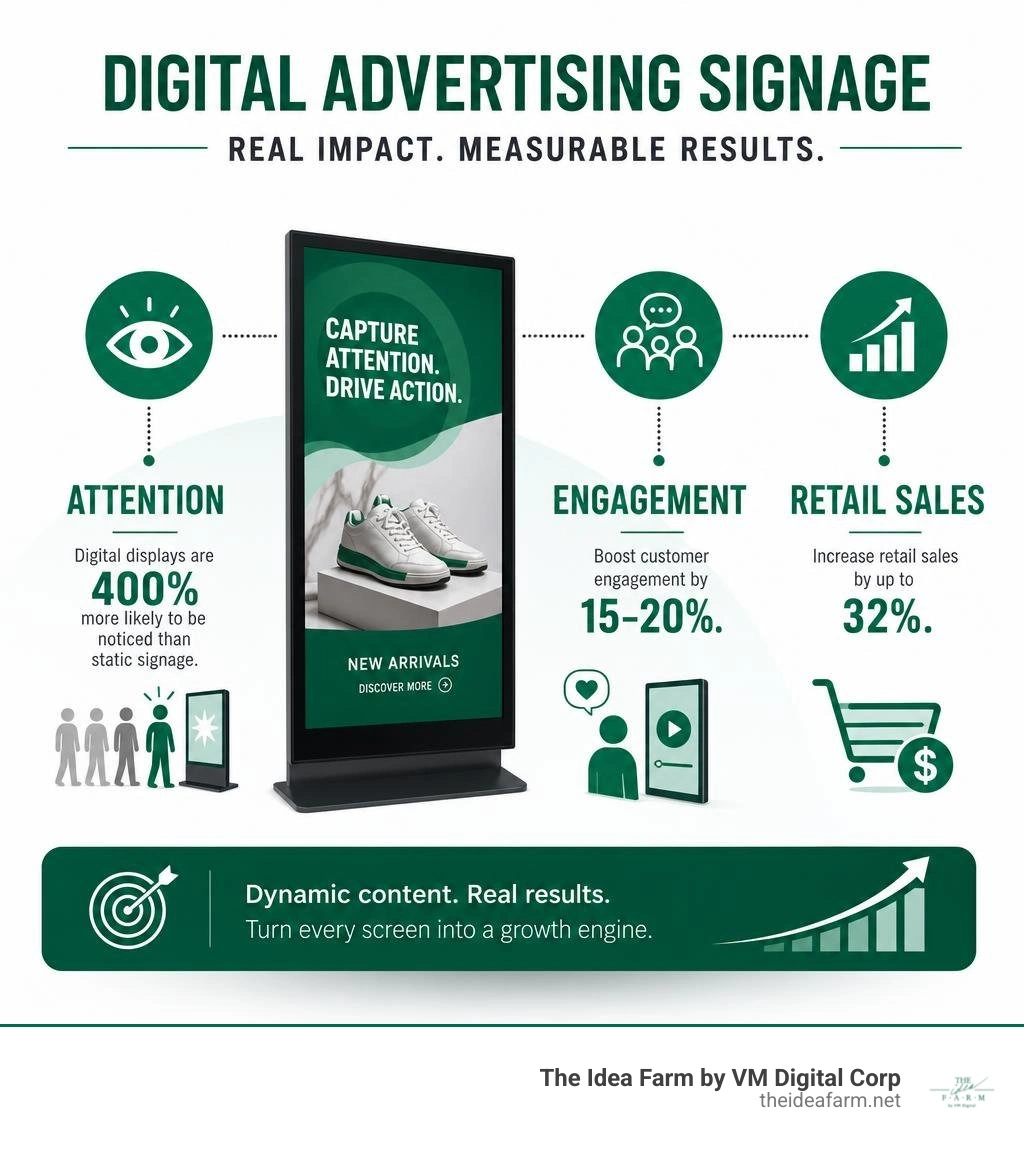
Know your digital advertising signage terms:
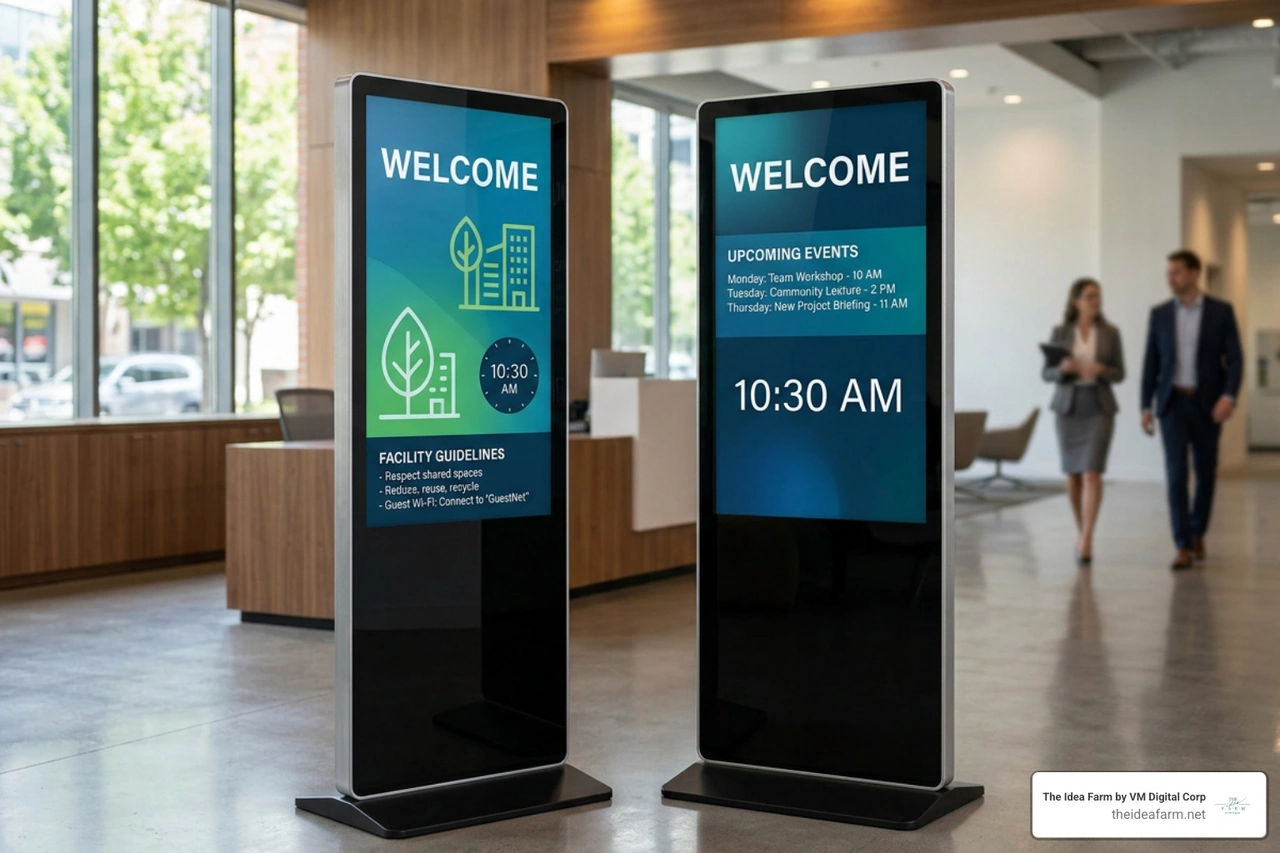
Floor-standing digital advertising signage is a screen that stands on its own. It does not need to hang on a wall. It has its own heavy base. It looks like a tall, slim pillar. People also call these screens digital totems.
These are not like normal home TVs. They are built to work hard. They have strong metal cases and tough glass. They also have fans inside to keep them cool. This means they can stay on all day and night without breaking.
Every floor-standing screen has three main parts:
You can choose between wall screens and floor screens. Both are good, but floor screens have some great benefits.
Wall screens stay in one place. They are good for menus behind a counter. But you cannot move them easily. If you want to move a wall screen, you have to pay workers to move the wires and mount it again.
Floor screens are easy to move. Many of them have wheels. You can roll them to where most people are walking. If you change your store layout, you can just roll the screen to a new spot.
Also, floor screens sit at eye level. Customers do not have to look up to see your ads. The screen is right in front of them as they walk in. This makes it easy for people to see and touch.
Today's screens are very smart. They show beautiful pictures and are easy to update.
Most indoor screens use high-quality displays. They show very clear pictures. People can see the screen clearly even if they are standing to the side.
Many screens have a computer built right inside them. This means you do not need extra wires or boxes. It keeps everything looking neat and clean.
To change what is on the screen, you use a simple program on your computer. This is called a Content Management System, or CMS. For example, you can use the Digital Signage CMS Software Solution | Samsung VXT to send new menus or sales to your screens in seconds. You can do this from anywhere using the internet.
Buying new tools can feel scary. To help you see how they work, here is how different businesses use digital screens to solve problems.
In retail, speed is key. If you own a clothing store in Houston, TX, you cannot wait weeks for a print shop to make signs for a sudden heatwave. With digital signs, you can show ads for summer clothes in just minutes.
This speed helps you sell more. You can show videos of your products. Videos look much better than flat paper posters. If you want to learn how to plan these ads, read our Digital Ads Guide 2026.
In hotels and restaurants, digital screens act as helpful guides. Restaurants use them as menu boards. These boards can change by themselves. They show breakfast in the morning and lunch at 11:00 AM. You do not have to do anything.
This helps you manage your food. If you run out of soup, you can take it off the screen right away. This keeps customers happy. Your staff will not have to apologize for running out of food.
Schools and hospitals have a different job. They must share important news fast.
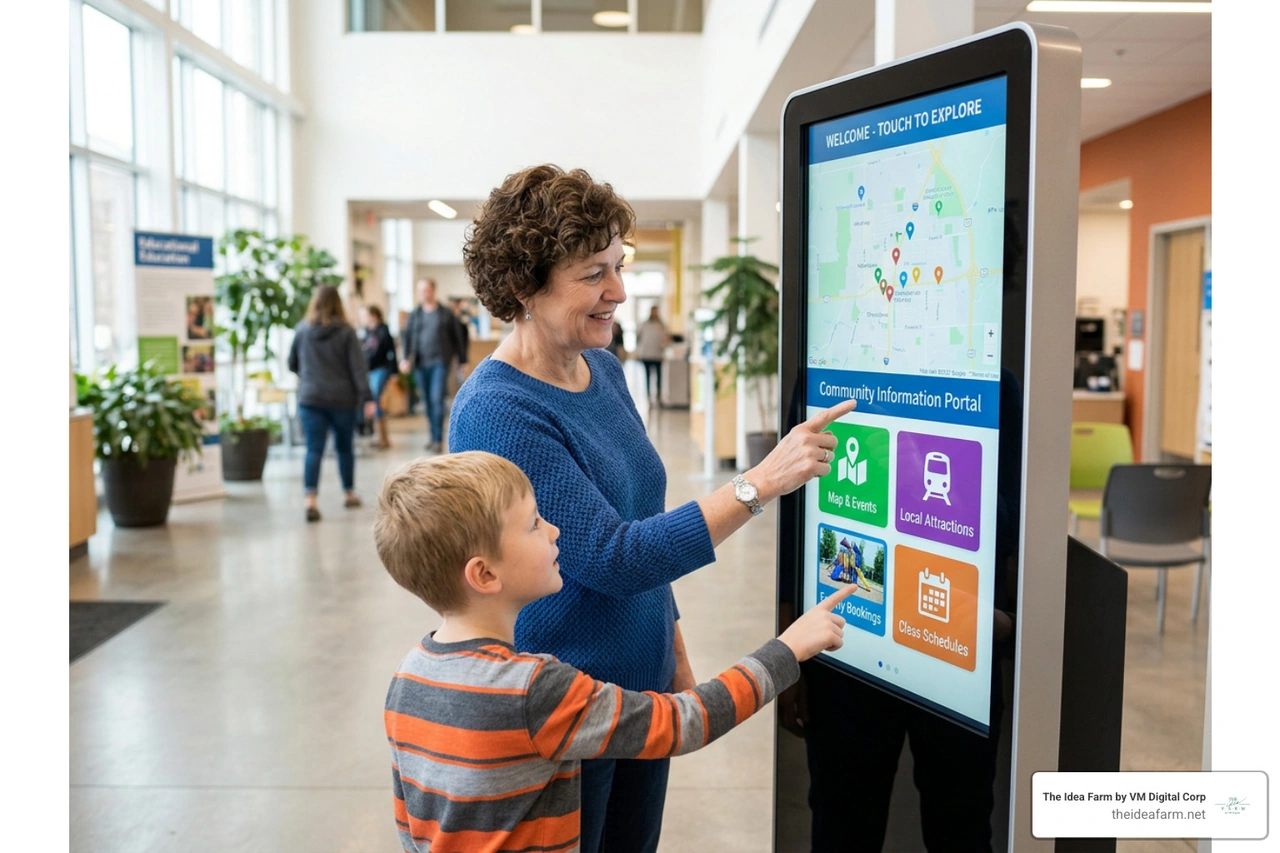
In a busy hospital, visitors are often stressed. They do not want to look at small paper maps. A floor screen can show an interactive map. Visitors can touch the screen to find their doctor. This stops them from getting lost.
Hospitals can also show wait times and health tips. This gives patients something to watch. It makes the wait feel 35% shorter. To keep these screens running well, many hospitals use software like Pickcel: The Digital Signage Platform for Modern Businesses to manage screens in different rooms.
On college campuses, digital screens replace messy paper bulletin boards. Schools can show student news, club events, and sports scores. Most importantly, these screens can show emergency alerts. If bad weather comes, every screen on campus can show safety rules instantly.
Picking the right screen and software can feel hard. To get the best results, you must find features that fit your goals.
First, think about screen size. A screen that is too small is hard to see. A screen that is too big might block your room. Most floor screens are between 32 inches and 55 inches wide.
Second, decide if you want a touch screen. Touch screens let customers look at your website, join your club, or find maps. If you only want to show ads, a normal screen is cheaper and easier to clean.
Third, think about how to move it. If you want to move your sign every day, get one with wheels that lock. If it will stay in one spot, get a heavy base that bolts to the floor.
Screen resolution is how clear your pictures look.
If people see the screen from far away, Full HD (1080p) is fine. It costs less and plays videos smoothly.
But if people stand close to the screen, 4K is the best choice. A 4K screen has four times more detail than a 1080p screen. This makes your text very sharp and your products look real.
Some businesses use special screens to stand out. For example, you can use the 49 Inch 360 Degree Rotating Advertising Kiosk Display - Victory Digital to turn your screen sideways with one click.
You also need to check screen brightness. Brightness is measured in "nits." Home TVs are about 200 nits. They look too dim under bright store lights. A good indoor sign should be at least 450 to 500 nits. If you want a very slim, high-quality look, check out the Slim Advertising Digital Totem - Dazzlesign .
The screen is only half of what you need. The software is what lets you run your ads.
Your digital sign needs to connect to the internet with Wi-Fi or a cable. This lets the screen talk to your software. If you have screens in different stores, you need a system that works online.
Here are some great software choices:
With the right software, your system can run on its own. You can set up your morning, afternoon, and night ads weeks ahead of time. To learn more about setting up these plans, read our guide on digital advertising campaign management.
Before you buy, you should know the real costs of owning a digital sign. The price of the screen is only the first step.
When you plan your budget, look at these three areas:
These screens last a long time. A good screen can run for 50,000 hours. That means it can stay on for over five years before you need a new one.
Setting up a new floor screen is very easy. Many screens come fully built. You just take it out of the box, plug it in, and connect to Wi-Fi. Then, you type a short code on the screen to connect it to your software.
After that, changing your ads is simple. You do not need to be an artist. Most programs let you drag and drop pictures. They also have free templates you can use.
A great feature to look for is local saving. This means the screen downloads your ads. If your internet stops working, the screen keeps playing your ads. When the internet comes back, it updates automatically.
Paper signs cost a lot to design and print. Every time you change a price or have a sale, you have to pay to print new signs.
Digital signs do not have these extra costs. Once you buy the screen, changing your message is free. You can show ten different ads on one screen. They can change every few seconds. This helps you make more money over time.
You might also look at local ads. For example, some businesses look at Rent High-Traffic Billboards in Danville, KY | Alluvit Media or search for Billboards in Danville's 40422 ZIP Code - BillboardsIn. In-store digital signs are a great match for these ads. They grab the attention of people who are already inside your store. This turns visitors into buyers.
You cannot use an indoor screen outside. Outdoor areas need special screens.
First, outdoor signs must handle the weather. Look for signs that keep out dust, rain, and snow.
Second, they must be very bright. Sunlight makes normal screens hard to see. Outdoor signs need to be very bright to cut through the sun.
Third, they must be safe. Outdoor signs need strong steel cases, good locks, and thick glass to protect them. If you are in Texas, you can work with local experts like LED Sign Manufacturer in Houston | LED Partners . You can also check out Houston, TX - South Loop Message Boards, Digital Signs & Displays or visit Digital Signs Houston, TX - The Custom Sign & Graphics Haus to find the right screen for hot weather.
Yes. You can manage one screen or a thousand screens from one computer.
You can group your screens by city or store. For example, if you have stores in Houston, TX and Danville, KY, you can show Texas ads on your Texas screens and Kentucky ads on your Kentucky screens.
You can also set the exact time for each ad to play. This saves you a lot of time. It also keeps your ads looking the same everywhere. To learn how we help businesses design these ads, check out our Digital Ad Design Guide 2026.
At The Idea Farm, we do not think of digital advertising signage as just another gadget. We see it as a key tool to help your business grow.
When you match your store screens with your online ads, you help your customers. A customer might see your ad online, walk into your store, and see the same ad on your floor screen. This helps them trust your brand and buy from you.
We can help you stop wasting money on paper signs. We can help you build a modern screen system. We work as your marketing partner to help your business grow.
Are you ready to start? Let's build your next digital ad campaign together. Contact us today to get started.