

June 11, 2026
Many business owners waste a lot of money on marketing. They try new ads. They change website colors. They write new headlines. But sales do not go up. They do not know what works. This is a big problem.
A marketing experimentation framework advisor is a helper for your business. They help your team plan and run tests. These tests show you what works. This means you make choices based on facts, not guesses.
Here is what they do and why it matters:
| What an Advisor Provides | Why It Matters |
|---|---|
| Structured experimentation framework | Replaces random testing with a repeatable system |
| Hypothesis and prioritization guidance | Focuses limited budget on the highest-impact tests |
| Statistical rigor and sample size planning | Makes results trustworthy and actionable |
| Business alignment | Connects every test to a real growth lever |
| Scalable decision-making process | Turns one-off wins into compounding revenue |
Most marketing teams run tests. But they do not have a plan. They change a price page. They change an email line. They change a web page. These changes feel good. But they do not help you learn.
Without a plan, teams look for quick wins. They do not try to understand customers. Soon, bosses stop trusting the tests.
This costs money. Companies with good plans get more sales. They make choices 30% faster. They get more back from their marketing spend. Teams without a plan lose money.
An advisor solves this problem. They do not just run simple tests. They build a system to help you make better choices fast.
I am Jose Escalera, CEO of The Idea Farm by VM Digital. I help businesses grow. I work as a marketing experimentation framework advisor. In this guide, I will show you how to hire the right advisor. I will show you how to build a testing plan that works.
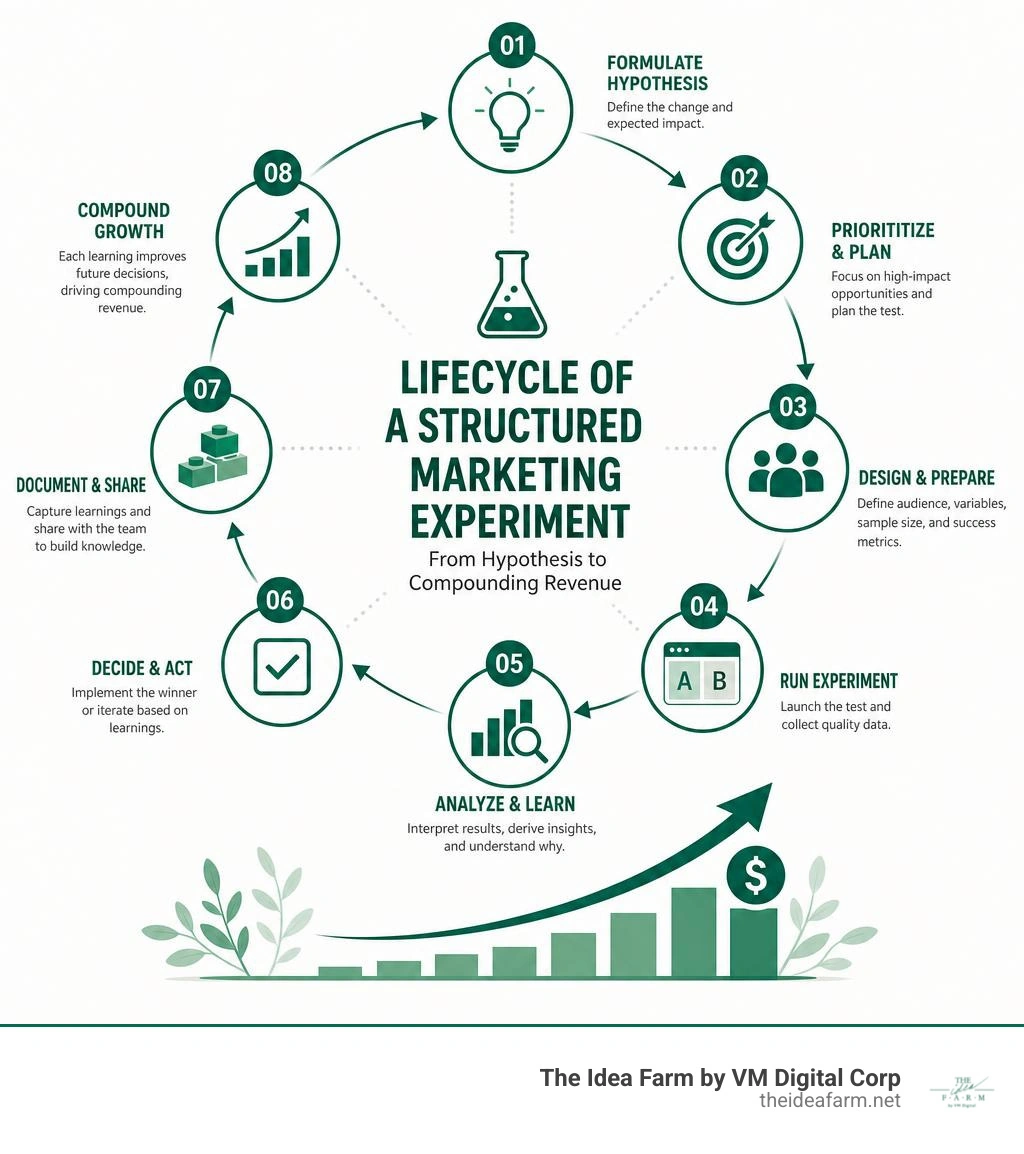
Many marketing teams test things randomly. A worker gets an idea. They change the website quickly. They look at the data a week later. They see a small rise in traffic. They call it a win and stop.
This is random testing. It is like walking in the woods with a broken compass. You feel like you are moving. But you are just walking in circles.
Random testing fails for three reasons:
To grow, we must Measure Marketing Effectiveness with a system. A good plan connects every test to a business goal. It stops the guessing. It helps you Improve Marketing ROI step by step.
Companies with a plan have 40% fewer failed tests. They write better guesses and pick the best tests first. They do not waste time on small changes. They focus on tests that teach them a lot.
An advisor will show you a structured system. Two popular systems are the 7-Step Framework and the GROWS Framework. Both bring order to your testing, but they are used for different goals.
This system is very detailed. It makes your team slow down and think before they build. Here are the steps:
This system is great for complex products. It stops teams from making quick, useless changes.
The GROWS system is fast and simple. It is great for software companies that need to move quickly. It stands for:
To learn more about these systems, read this guide on the Marketing Experimentation Framework.
The 7-step system is best for deep problems. It takes more time but teaches you more. The GROWS system is best if you want to test fast. An advisor will help you choose the best one for your business.
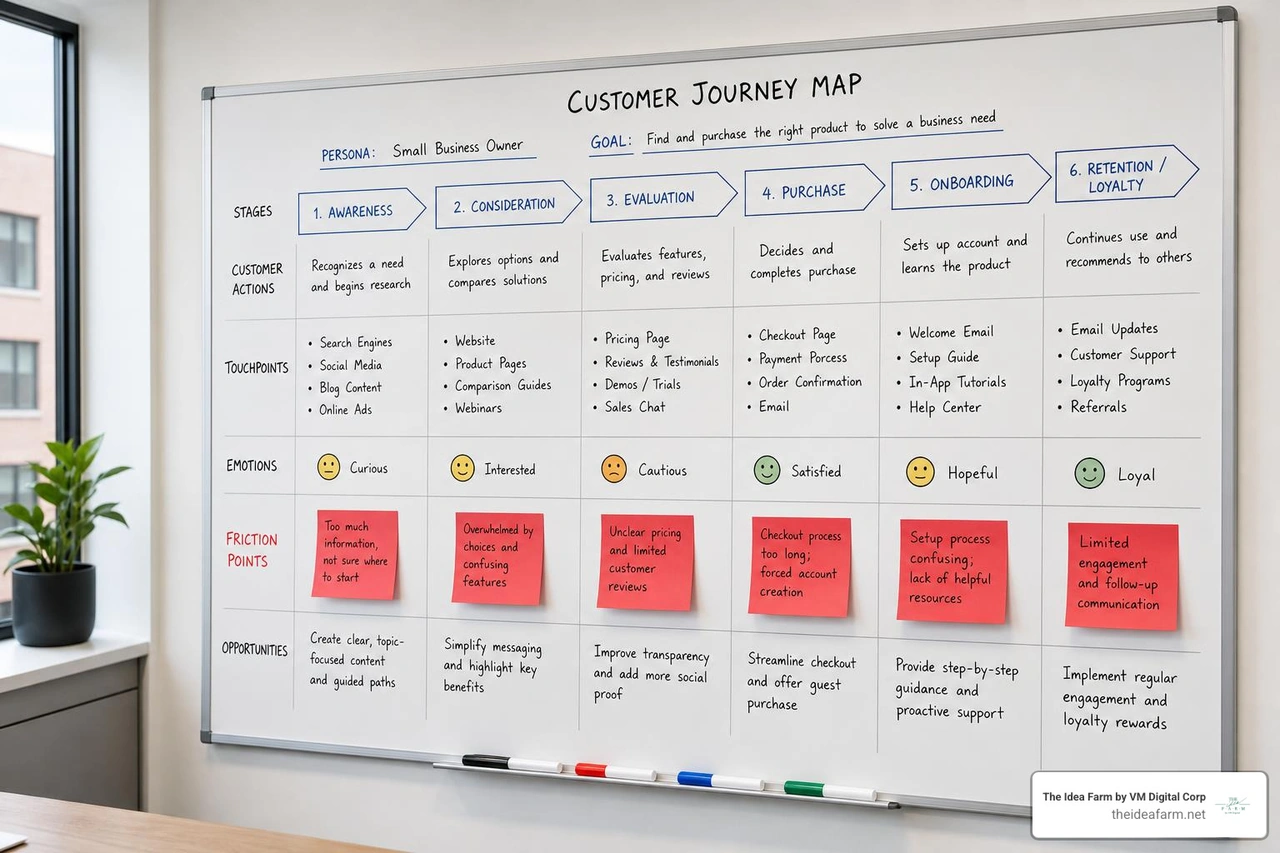
Many tests fail because they only change small things. Changing a button color from blue to green might help a little. But it will not grow your business. To make big changes, we must understand why people buy.
We use science and a tool called Jobs-to-be-Done (JTBD) to do this.
People do not always make logical choices. We buy things because of feelings, trust, and what others do. Good tests focus on these feelings.
For example, do not just offer a discount. Try showing reviews from real customers right before they buy. This builds trust. Or make your signup form shorter. This makes it easier to join. When we test these ideas, we win more often.
Customers do not just buy products. They "hire" them to help them do a job. If the product does not help them, they stop using it.
To make good tests, we use this simple sentence:
"When I [Context], But [Barrier], Help me [Goal], So I [Outcome]."
Here is an example of how this works:
With the JTBD way, you see that a discount does not solve the real problem. The user is afraid. Instead, you test sending the user a weekly report. They can show this report to their boss. This test solves the real problem. It leads to more sales and happier users.
Focusing on user feelings helps you get real Conversion Rate Optimization that lasts.
You cannot test every idea. You do not have the time or money. You need a way to pick the best ideas. You also need math to make sure your results are real.
Most teams use ICE scoring to rank ideas. ICE is simple. But good advisors like the Revenue Rank model. This model guesses how much money the test will make before you start.
| Metric | ICE Scoring | Revenue Rank (PRISM Method) |
|---|---|---|
| Focus | Subjective ease and confidence | Objective financial forecasting |
| Inputs | Impact (1-10), Confidence (1-10), Ease (1-10) | Traffic volume, conversion lift, average order value |
| Output | A relative score to compare ideas | A predicted dollar amount of recovered revenue |
| Best For | Early-stage teams sorting raw ideas | Mature programs looking for revenue accountability |
Using Revenue Rank stops you from wasting time on easy tests that do not make money.
To run tests that your boss will trust, you must know three things:
Good advisors use special math to check tests safely. This stops teams from stopping tests too early. If you want to learn more about these rules, check out the RLSE Experimentation Framework.
You can buy great testing tools, but tools do not make choices. People do.
Many companies buy tools and never use them. Or they run bad tests that give wrong answers. This leads to bad choices.
An advisor does more than set up tools. They help your team change how they think. They help you move from a culture of opinions to a culture of facts. Instead of doing what the boss says, you do what the data says.
This change is very important. To learn how to build this mindset, read this article on Building an Evidence-Based Culture. When your company trusts tests, everyone can work together using real facts.
We help businesses make this change with our Strategic Marketing Consulting. We build systems that turn data into growth.
As your business grows, your needs will change. An advisor helps you grow your testing plan:
If you want to grow but do not have the skills yet, hiring a Growth Marketing Consultant is the fastest way to get help.
Should you hire a full-time worker or an outside advisor? Here is how they compare:
For mid-sized businesses, starting with a fractional advisor is usually the best choice.
Most tests should run for four to seven weeks. Sites with a lot of traffic can get results faster. But running a test for a month is best. It covers different days of the week and different buyer habits. Always find your sample size before you start. This makes sure your test is strong enough to show real results.
A business problem is about company goals. For example: "We need to make more money per sale." A customer problem is about user pain. For example: "I want to buy this bundle, but I do not know if these items work together." If you only solve business problems, users will leave. If you solve customer problems, your business will win.
Do not just look at single wins. Measure the money made by those changes over a whole year. You should also track how fast your team makes choices. A good testing plan pays for itself by stopping bad, untested ideas from launching.
Running a business without a testing plan is like sailing without a rudder. You might move when the wind blows. But you cannot steer.
An experienced marketing experimentation framework advisor gives you that rudder. They give your team the tools, the math, and the plan to turn every dollar into useful customer facts.
At The Idea Farm, we are not just an agency that does random tasks. We are a growth partner. We build marketing systems based on your goals and numbers. If you are ready to stop guessing and start growing, let us talk. See how our Fractional CMO services can help you build a growth engine that works.