
May 20, 2026
Improving business growth comes down to five core actions most businesses underinvest in:
These are not shortcuts. They are systems. And systems compound over time.
Here is the hard truth most business owners face: you have a good product, a capable team, and real customers. But growth still feels inconsistent. Some months are strong. Others are not. Marketing spend goes out the door and results are hard to trace.
Research from McKinsey shows that fewer than one in four companies outpace their peers on both revenue and profit growth. That is not a talent problem. It is a systems problem.
The businesses that do break through share one thing in common. They stop guessing and start measuring. They build repeatable systems instead of chasing tactics. And they treat growth as a deliberate choice, not a lucky outcome.
This guide will show you exactly how to do that.
I'm Jose Escalera, CEO of The Idea Farm by VM Digital, with a background in building companies across multiple sectors and a career rooted in sales, media, and strategic execution. I've worked hands-on with early-stage and growth-stage businesses to improve business growth by aligning marketing, messaging, and commercial systems that are accountable to real results. If you are tired of disconnected efforts and want a clearer path forward, this guide was written for you.

Improve business growth terms at a glance:
As we move through 2026, the gap between businesses that scale and those that stall is widening. The "hustle" that got you to your first few million in revenue often becomes the very thing that prevents you from reaching the next level. To improve business growth now, you must move from founder-led chaos to structured systems.
Digital transformation is no longer a buzzword; it is a survival requirement. High-growth firms are those that use technology to do more with less. This includes adopting AI automation to handle repetitive tasks, freeing up your best people to focus on high-value strategy.
A major part of this shift involves following proven frameworks. For instance, How to Grow Your Business (6 Strategies) | Salesforce highlights that market expansion and revenue diversification are key pillars. If all your revenue comes from one type of client in Houston TX or Danville Kentucky, you are at risk. Smart businesses look for "natural offshoots" of their core products to enter new markets without starting from scratch.
Our team of Business Growth Experts often sees that the most successful companies are those that prioritize resilience. This means having the courage to invest in growth even during uncertain times. While others pull back, the outperformers double down on their core strengths while testing new waters.
Technology is the engine of modern expansion. Without a central "source of truth," your data lives in spreadsheets and people's heads. This is why a robust CRM system is non-negotiable. A CRM does more than store phone numbers; it tracks the entire customer journey, allowing you to see exactly where leads are falling out of your funnel.
We build Growth Marketing Systems that connect your sales data with your marketing efforts. When you use data analytics, you can stop arguing about opinions and start making decisions based on facts.
Key tech tools for 2026 include:
Growth is not a one-time event. It is the result of small, incremental changes made every day. This is what we call a culture of continuous improvement. Research on Courageous growth: Six strategies for continuous growth outperformance shows that companies that foster a risk-tolerant innovation culture grow much faster.
This starts with leadership buy-in. If the owners are afraid of failure, the employees will be too. You need feedback loops where team members can suggest improvements without fear. When you measure these small changes using KPIs, you can see the compounding effect over months and years.
You cannot grow what you cannot fund. Many businesses fail not because they lack customers, but because they run out of cash while trying to serve them. Managing the "growing pains" of scaling requires a deep understanding of your numbers.
Fixed Costs
Variable Costs
To improve business growth, you must protect your essential investments—like marketing and technology—while ruthlessly eliminating waste. This is where Comprehensive Growth Solutions come into play. By looking at your business holistically, you can find the capital needed to fuel expansion.
Cash flow is the lifeblood of your business. In 2026, it is the most important planning lever you have. We often advise clients to act as their own Business Growth Consultant by auditing their receivables. Are your customers paying on time? If not, your growth is being throttled by your own balance sheet.
Ways to optimize cash flow include:
Scaling too fast is just as dangerous as not growing at all. If your infrastructure isn't ready, a sudden surge in orders will break your service quality. This is why we emphasize Startup Growth Marketing principles even for established firms: stay lean, stay fast, but build for the long term.
Use SMART goals (Specific, Measurable, Achievable, Relevant, Time-bound) to guide your path. Instead of saying "we want to grow," say "we will increase revenue by 20% in Houston TX by December 2026 through three new partnership channels." This clarity reduces risk and gives your team a target they can actually hit.
Marketing is not an expense; it is an investment in a system. If you put $1 in, you should know exactly how much comes out the other side.
Most businesses focus only on the top of the funnel—getting new leads. But the real growth happens when you optimize the entire journey. Using tools like the Value Proposition Canvas helps you understand the specific "pains and gains" of your customers. When your messaging speaks directly to their problems, your Customer Acquisition Strategy becomes much more effective.
In B2B Marketing Growth, visible expertise is your greatest asset. Over 50% of prospects rule out a firm before they even talk to them. They check your website, your LinkedIn, and your social proof. If you don't look like an expert, you lose the deal before it even starts.
It is much cheaper to keep a customer than to find a new one. Data allows you to Improve Marketing ROI by identifying your most profitable segments.
Track these key metrics:
By using personalized engagement and loyalty programs, you turn one-time buyers into brand advocates. These advocates then fuel your referral networks, which is the highest-ROI form of marketing.
You cannot scale a business alone. Hiring for cultural fit is just as important as hiring for skill. A brilliant employee who doesn't share your values will eventually cause friction that slows you down.
Our approach to B2B Growth Consulting includes helping leaders build "talent win rooms." This means identifying the specific skills you need to reach your 2026 goals and creating a plan to develop your existing team. When you invest in employee development, you aren't just being nice—you are building the capacity to handle more growth.
The biggest hurdle is often operational complexity. As you grow, things that used to be easy—like communication or quality control—become difficult. You might also face funding gaps where you need to spend money on staff or inventory before the revenue from new sales actually hits your bank account. Hiring the right talent fast enough is another common "bottleneck" that can stall a healthy business.
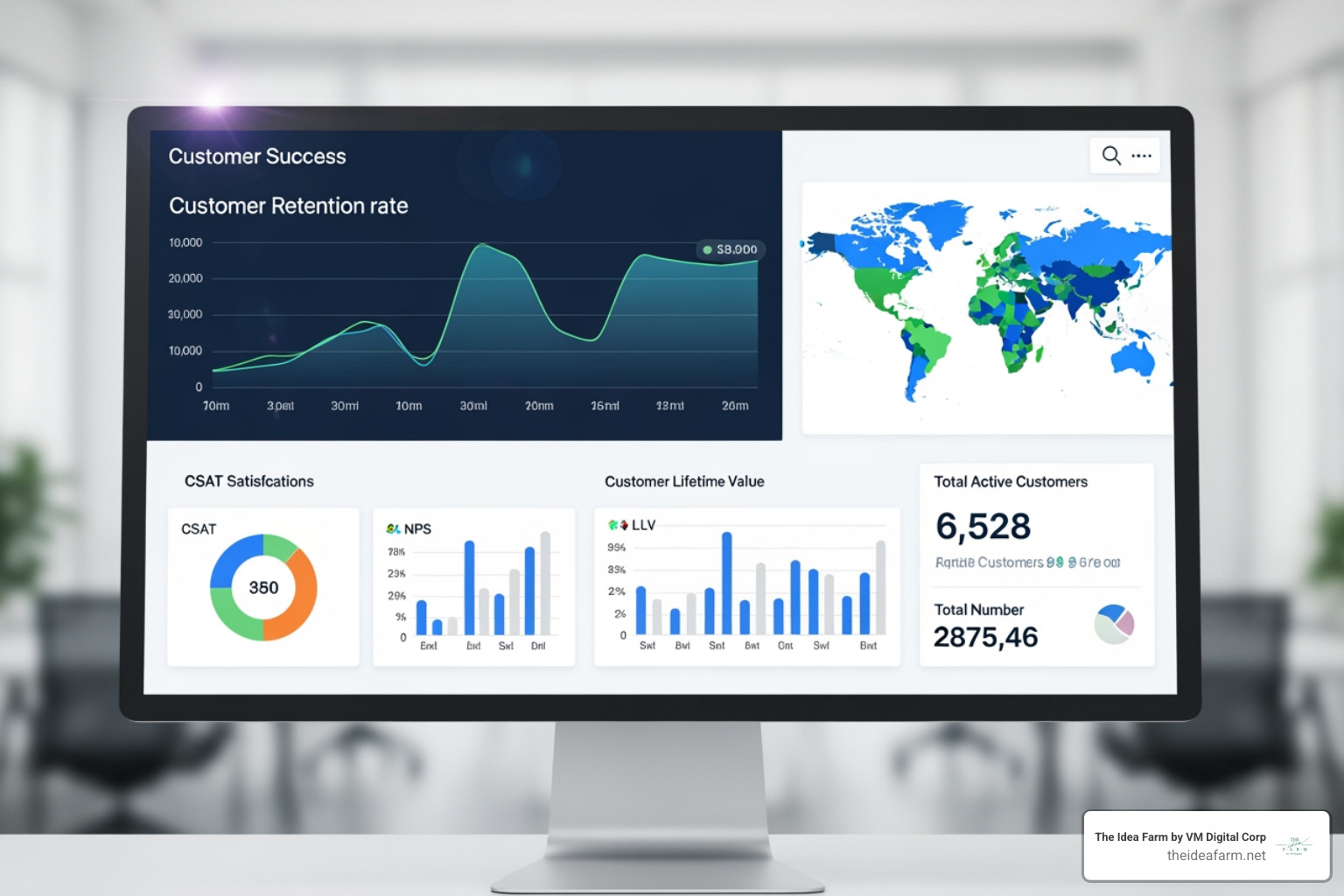
Don't just look at the total "top line" revenue. To truly improve business growth, you must track profit margins. If your revenue goes up by 20% but your costs go up by 30%, you aren't growing—you're shrinking. Track your customer acquisition rate and retention rate to ensure your growth is sustainable. Use a central dashboard to keep these KPIs visible to your whole leadership team.
In the United States, the Small Business Administration (SBA) is a goldmine. They offer specific programs for women-owned, veteran-owned, and rural businesses. Whether you are in Houston TX or Danville Kentucky, there are local grants and low-interest loans designed to help small-to-mid-sized businesses expand. Networking at local chambers of commerce can also open doors to partnerships you won't find online.
At The Idea Farm, we don't believe in "random acts of marketing." We believe in building connected, data-driven systems that make growth predictable. Whether you are looking for a fractional growth partner or a complete overhaul of your commercial strategy, the goal remains the same: to move the needle on your numbers.
Growth is a choice. It requires the courage to change your systems, the discipline to track your data, and the vision to see where your market is heading in 2026. If you are ready to stop guessing and start scaling, it is time to look at the facts.
Ready to see how your numbers stack up? Explore The Growth Dashboard and let's start building a system that works for you.