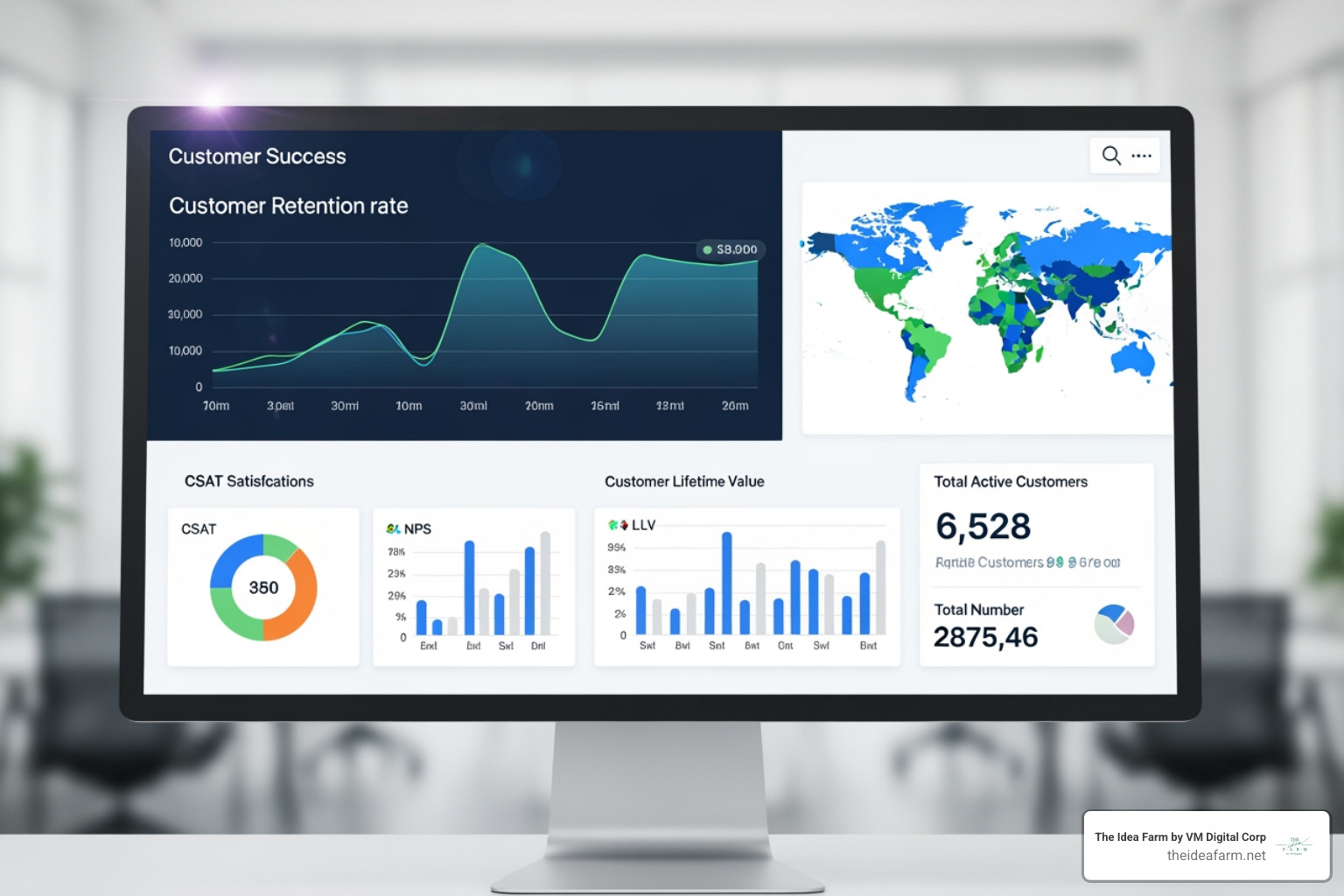

June 25, 2026
Marketing revenue attribution is how you connect your marketing and sales to the money you make. It stops you from guessing. It shows you exactly which steps turned a stranger into a buyer.
Here is a quick breakdown of what it means and why it matters:
Most marketing teams track the wrong things. They look at clicks and form sign-ups. These numbers look nice, but they do not tell you which ad actually made the sale.
This is a big problem for business-to-business (B2B) sales. A buyer might see an ad, read an email, watch a video, and talk to a sales rep before they buy. If you only look at the last click, you miss the whole story.
Revenue attribution helps you see the whole story. It connects your marketing work to real sales.
I am Jose Escalera, CEO of The Idea Farm by VM Digital. I have worked in sales, media, and business building for a long time. I have seen how marketing revenue attribution helps businesses grow with confidence. In this guide, I will show you the models, the metrics, and the easy steps to build your own system.
To grow your business, you must know where your money comes from. Many leaders look at reports and see lots of clicks. They see high traffic and many form sign-ups. But when they look at their bank accounts, the money is not there.
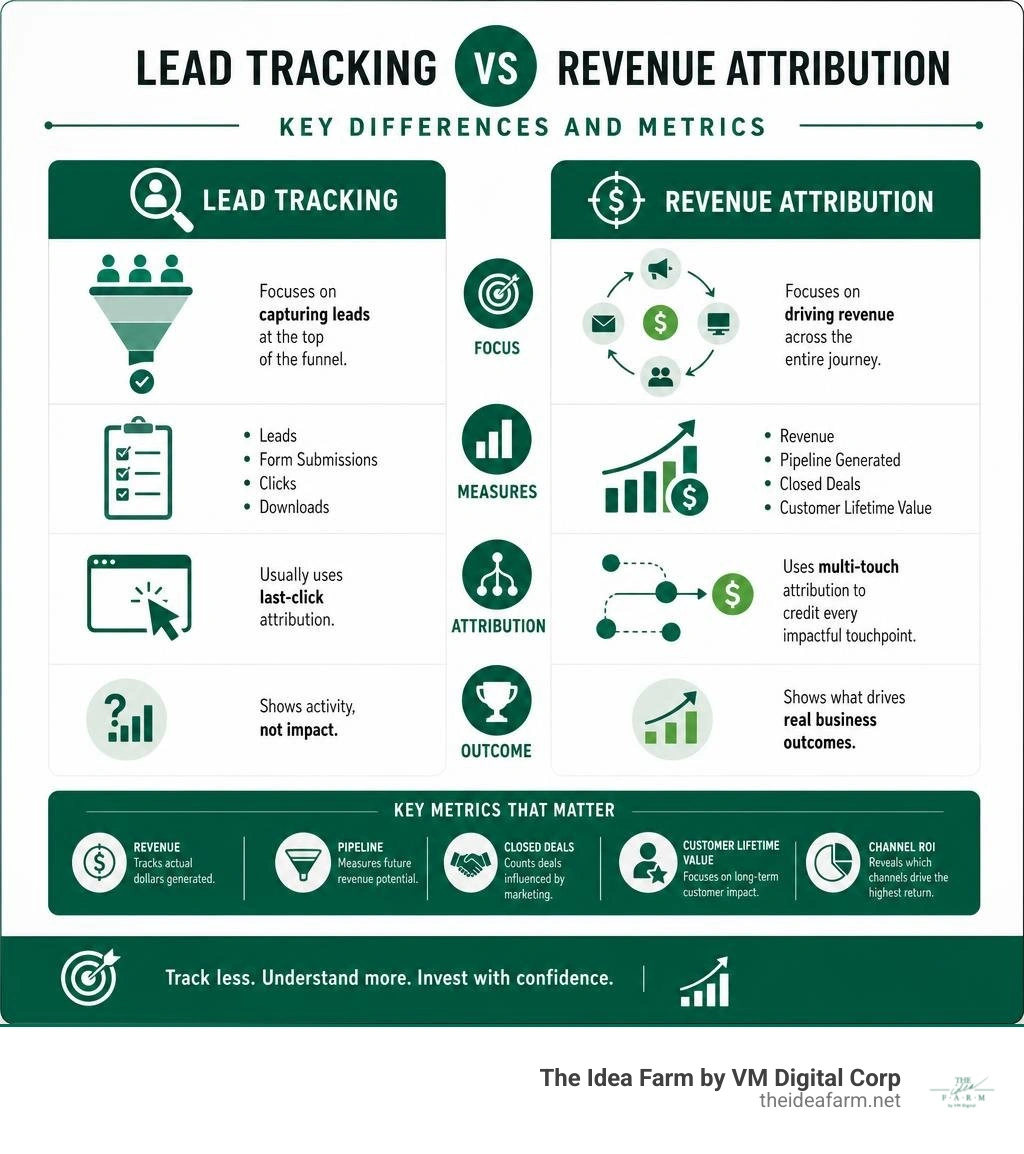
This happens because simple tracking is not the same as true marketing revenue attribution.
According to DealHub, revenue attribution matches what you spend to get customers with the actual money those customers spend. You can read more about this on the What is Revenue Attribution? - DealHub page.
Simple tracking only tells you when someone clicks a link or downloads a file. It does not tell you if they ever bought anything. Lead tracking is a bit better because it tracks who became a lead. But even lead tracking is not enough. A campaign can bring in thousands of leads. If none of them buy, the campaign is a failure.
With revenue attribution, you connect every dollar you spend to a real sale. This helps you Measure Marketing Effectiveness by showing the exact path a customer took before buying.
Simple tracking treats every click the same. This leads to bad choices.
Imagine you run two ads. Ad A is a social media post with a free checklist. It gets 500 sign-ups. Ad B is an email about a hard business problem. It only gets 50 sign-ups.
If you only look at sign-ups, you will stop Ad B and put all your money into Ad A.
But what if none of the 500 people from Ad A ever buy anything? And what if 10 people from Ad B buy your most expensive service? Without revenue attribution, you would stop your best ad because you looked at the wrong numbers.
By using Customer Data Driven Marketing, you can track lead quality instead of just lead numbers. You learn which channels bring in the best buyers. This helps you focus on real growth instead of empty numbers.
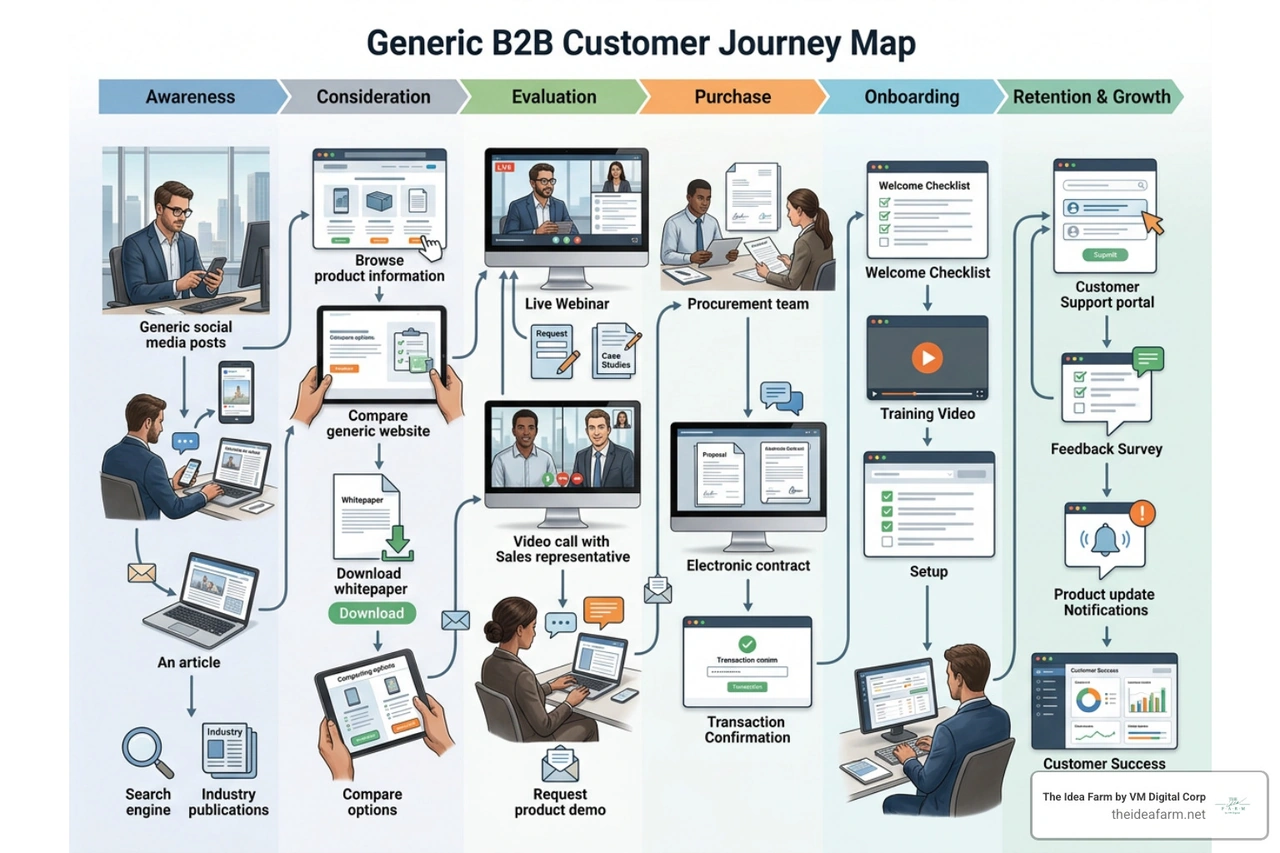
If you sell software to other businesses, your sales path is not simple. People do not see an ad and buy complex software five minutes later.
Instead, a business sale can take six months or more. A buyer might read a blog post, see an ad, get an email, watch a video, and talk to three sales reps.
Without a clear system, you cannot tell which step actually made the sale. This is why having a Data-Driven Marketing ROI Guide 2026 is so important for modern brands.
When you track the whole path, you see how different steps work together. You might find that your blog posts do not get direct sales, but they are the first thing your biggest clients read. This shows that your content builds trust early on.
Revenue attribution stops the fights between sales and marketing teams.
In many companies, marketing says they brought in great leads. But sales says those leads are bad. This is a very common and costly problem.
Here are some facts:
With marketing revenue attribution, both teams look at the same data. Marketing is not judged just on the number of leads. Instead, they are judged on real sales. Sales reps can see what the buyer looked at before the first call. This helps them have better conversations and close more deals.
To start, you must choose a model. A model is a set of rules. It decides how much credit each step gets for a sale.
The two main types of models are single-touch and multi-touch. To help you understand them, we made a simple list below. You can also read the Google guide to Get started with attribution - Analytics Help to see how tools define these terms.
The right model depends on your business size, your sales path, and your goals.
If you are a small business with a short sales path, a simple model like Time-Decay works well. But if you sell complex software, a single-touch model will give you wrong data. It will make search ads look great while making your blog look useless.
For larger businesses, data-driven attribution is the best choice. This model uses smart computer programs to look at all paths. It calculates the real impact of each step.
To see how big companies do this, you can read the research paper on LiDDA: Data Driven Attribution at LinkedIn . Their system uses smart data to build highly accurate models. You may not need a system as big as theirs, but the rule is the same: use real data, not guesses, to give credit.

Setting up this system needs good tech tools. You cannot just add a simple tracking code and hope it works.
To get good reports, you must connect all your tools. Your ads, website, email tools, and sales software must talk to each other. When you connect them, you get true Marketing Performance Optimization.
Here are the main things you need:
Once your tech is ready, you must watch the right numbers.
Do not worry about simple clicks. Focus on numbers that affect your bank account. When you focus on these, your Marketing ROI Calculation becomes very accurate.
Watch these key numbers:
Many companies make mistakes when they start.
The biggest mistake is keeping data in separate places. If marketing looks at one tool, sales looks at another, and finance looks at a third, your numbers will not match. You must use one main tool for all your data.
Another mistake is setting the wrong tracking time. If your sales take six months, but your tool only tracks for 30 days, your reports will look like your ads are failing.
Finally, do not make things too hard at the start. It is better to start with a simple, clean system. You can make it better over time. Focus on clean data first to Improve Marketing ROI step by step.
Marketing ROI shows you the big picture. It tells you if you made more money than you spent.
Revenue attribution is much more detailed. It tells you exactly how you made that money. ROI tells you if your marketing worked. Attribution tells you which specific ad, email, or post made the sale.
For most mid-sized companies, it takes about eight to twelve weeks.
This time is used to check your current tools, set up server tracking, connect your sales software, and train your team.
Yes. You do not need data scientists to start.
Modern tools have great tracking built right in. By working with a partner like us, you can build your system without hiring new full-time workers. We handle the hard tech setup so you can focus on making smart choices.
Stop making business choices based on guesses. Clicks do not pay the bills. Real money does.
Using marketing revenue attribution is the only way to know what actually grows your business. It helps your teams work together, saves your budget, and shows you how to grow.
At The Idea Farm, we do not just give you reports with empty numbers. We are your growth partner. We build smart marketing systems made for your business goals. Whether you are in Houston, TX, or Danville, KY, we help you trace every dollar to a real sale.
Ready to see exactly where your marketing money goes? Book a strategy session with The Idea Farm today. Let us build a clear system to grow your business.